Blog
Brinks Commercial Door Closer BC4031: Specs, Installation, Adjustments and Complete Guide 2026

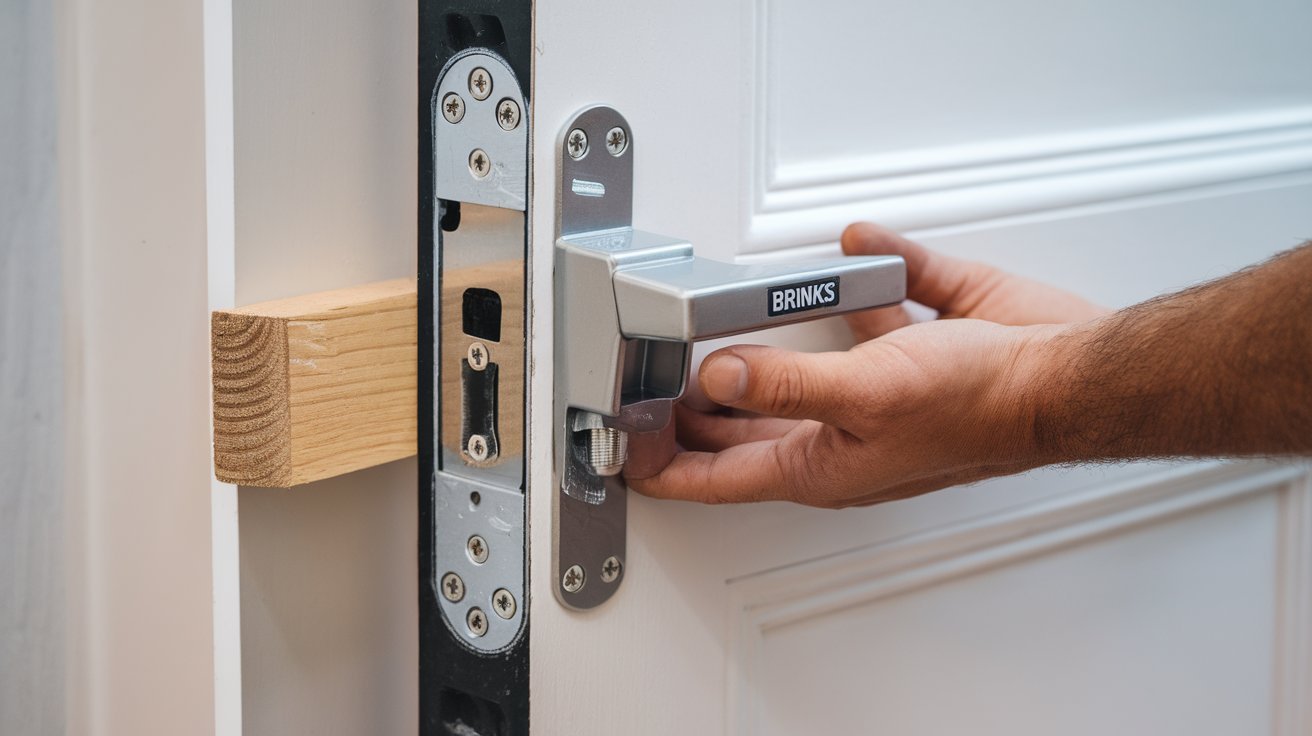
The Brinks Commercial Door Closer BC4031 is a heavy-duty, adjustable commercial door closer designed for high-traffic interior and exterior doors. Its combination of ANSI Grade 1 performance, adjustable Size 1–5 spring power, ADA compliance, 180-degree opening capability, and multiple mounting options makes it a versatile choice for commercial buildings and demanding door applications.
The BC4031 is designed to automatically close a door after opening while allowing installers to adjust important functions such as spring power, sweep speed, latching speed, and backcheck. Brinks specifies the model for left- or right-hinged interior doors up to 200 pounds and 54 inches wide, and exterior doors up to 200 pounds and 42 inches wide.
Whether it is being installed in an office, retail space, school, apartment building, warehouse, church, medical facility, or another commercial environment, understanding the BC4031’s specifications and adjustment options is essential for proper operation.
Brinks BC4031 Door Closer Specifications and Features
The BC4031 is Brinks Commercial’s aluminum-finish heavy-duty door closer. It has an all-metal body construction and is built for high-traffic commercial applications. The unit is adjustable from closer Size 1 through Size 5, allowing the installer to increase or decrease spring power according to the door and installation requirements.
Key specifications include:
- Model: BC4031
- Finish: Aluminum
- Closer rating: Adjustable Size 1–5
- Interior door capacity: Up to 200 lbs. and 54 inches wide
- Exterior door capacity: Up to 200 lbs. and 42 inches wide
- Handing: Left- or right-hinged doors
- Mounting: Standard, top jamb, or parallel arm
- Opening range: Up to 180 degrees
- Performance rating: ANSI Grade 1
- Fire rating: UL Listed, 3-hour fire rated
- Accessibility: ADA compliant
- Warranty: Limited 10-year warranty
- Product dimensions: Approximately 12.63 inches wide, 3.63 inches high, and 4.38 inches deep
- Product weight: Approximately 5.94 pounds
The adjustable spring power is one of the BC4031’s most important features. Instead of requiring a separate closer for every door size, the same closer can be configured for lighter or heavier applications within its rated range.
This flexibility can simplify replacement projects, especially when a building contains doors of different widths and weights.
What Doors Can the Brinks BC4031 Be Used On?
The Brinks BC4031 commercial door closer is intended for demanding interior and exterior applications, but the maximum recommended door size differs between the two.
For interior doors, Brinks rates the closer for doors up to 54 inches wide and 200 pounds. For exterior doors, the maximum rating is 42 inches wide and 200 pounds.
Exterior doors often experience additional resistance from wind, weather conditions, seals, and air pressure differences. For that reason, the same closer may require more spring power on an exterior door than on a similarly sized interior door.
The BC4031 includes an adjustable backcheck function, which helps create hydraulic resistance as the door approaches the fully open position. Brinks notes that backcheck can help prevent damage caused by wind on exterior-facing doors. However, backcheck is not intended to serve as a positive mechanical door stop.
Before selecting the closer, installers should consider the complete door assembly, including door width, weight, hinges, frame construction, weatherstripping, seals, wind exposure, and traffic level.
A closer that is technically rated for a door may still require careful adjustment to provide acceptable opening force and reliable closing performance.
BC4031 Standard, Top Jamb and Parallel Arm Installation
One of the biggest advantages of the Brinks BC4031 is its support for three common commercial mounting methods: standard arm, top jamb, and parallel arm installation.
Standard mounting is generally used when the closer body is installed on the door and the arm connects to the frame. This configuration is commonly used when the installation geometry allows the closer to be positioned on the appropriate side of the door.
Top jamb mounting places the closer body on the frame, with the arm connecting to the door. This can be useful when the door or frame configuration makes standard mounting unsuitable.
Parallel arm mounting positions the arm parallel to the door when it is closed, producing a cleaner appearance on the push side of many commercial doors. It requires correct arm positioning and preload during installation.
The official installation instructions provide different drilling locations and arm arrangements depending on the desired opening angle and mounting method. Installation dimensions are measured from the hinge centerline, and the instructions warn installers not to scale the drawings.
For proper operation, the forearm must be adjusted to the correct position. In regular-arm and top-jamb installations, the instructions specify positioning the forearm at approximately a 90-degree angle to ensure proper preload.
Using the wrong mounting pattern or incorrectly positioning the arm can cause difficult opening, poor closing, or problems adjusting the closer.
How to Adjust Brinks BC4031 Closing Speed and Latching Speed
After the mechanical installation is complete, the BC4031 must be adjusted so the door closes safely and consistently.
The closer includes separate hydraulic controls for closing or sweep speed and latching speed. Sweep speed controls much of the door’s movement as it closes from the open position, while latching speed controls the final portion of travel as the door moves into the closed and latched position.
The installation instructions state that turning the regulating valves clockwise slows door movement, while turning them counterclockwise increases the speed. Brinks cautions installers not to back the valves out of the closer, as doing so can cause leakage.
The instructions recommend adjusting the standard closing cycle to approximately 4 to 6 seconds from 90 degrees. Doors used by elderly people, people with disabilities, or small children may require longer closing times.
Adjustment should be made gradually. A practical approach is to turn a valve only a small amount, test the door, and then repeat as necessary.
If the door closes too quickly, it may slam, create excessive noise, or create a safety concern. If it closes too slowly, it may fail to latch consistently or allow unwanted air movement through the opening.
Brinks BC4031 Spring Power and Backcheck Adjustment
The adjustable Size 1–5 spring power allows the BC4031 to be matched more closely to the door. Higher spring settings provide more closing force, while lower settings reduce the force needed to operate the door.
According to Brinks support guidance, if the door is too difficult to push or pull open, installers using regular-arm or top-jamb mounting should first check that the forearm is positioned correctly. The support guidance recommends ensuring the forearm is at a 90-degree angle, reducing the spring power by backing out the “P” or power valve until it reaches its stop, and, where applicable, repositioning the forearm connection to reduce opening force.
The backcheck valve controls hydraulic resistance during the latter part of the opening cycle. Turning the adjustment in one direction increases resistance, while the opposite direction decreases it. The installation information specifically warns that the backcheck valve should never be closed completely and should not be treated as a substitute for a door stop.
Correct adjustment requires balancing several factors. The door needs enough closing force to overcome seals and latch reliably, but excessive spring power can make the door unnecessarily difficult to open.
Common Brinks BC4031 Problems and Troubleshooting Tips
If a newly installed Brinks BC4031 door closer does not operate correctly, the problem is often related to installation geometry or adjustment rather than a defective closer.
If the door is difficult to open, check the spring-power setting and arm position. Brinks recommends confirming the proper forearm angle and reducing the spring setting where appropriate.
If parallel-arm adjustments do not appear to work, Brinks advises reviewing the arm installation procedure. The pinion must be rotated and the main arm positioned correctly during installation; incorrect arm positioning can prevent normal closer operation.
Another important rule is to avoid over-adjusting valves. Hydraulic controls should not be unscrewed beyond their intended operating range because leakage can result.
Is the Brinks Commercial Door Closer BC4031 a Good Choice?
The Brinks Commercial Door Closer BC4031 is a strong option for applications requiring a heavy-duty, versatile, commercial-grade door closer. Its adjustable Size 1–5 power range, support for three mounting configurations, ANSI Grade 1 rating, ADA compliance, and UL-listed 3-hour fire rating give it a broad range of potential uses.
The closer is particularly suitable for high-traffic interior doors up to 54 inches wide and exterior doors up to 42 inches wide, provided the complete door system falls within the manufacturer’s specifications.
Its adjustable closing speed, latching speed, spring power, and backcheck allow installers to fine-tune operation for the specific application. The availability of standard, top-jamb, and parallel-arm mounting also makes it useful for both replacement work and new commercial installations.
Fascisterne is a Danish word that translates most directly into English as “the fascists.” It is the definite plural form of fascist and refers to people associated with, supporting, or belonging to fascist movements. The word itself does not identify one particular political party or organization; its exact meaning depends on the historical or political context in which it appears.
For English-speaking readers, fascisterne can look like an unfamiliar political term. Understanding its Danish grammar, historical origins, connection with European fascism, and particular relevance to Denmark makes the meaning much clearer.
What Does Fascisterne Mean in English?
The simplest translation of fascisterne is “the fascists.” It describes people rather than the ideology itself.
The distinction becomes clearer when the related Danish words are separated:
- Fascist — a fascist
- Fascisten — the fascist
- Fascister — fascists
- Fascisterne — the fascists
- Fascisme — fascism
The ending “-erne” is important because Danish uses it to form the definite plural. Consequently, fascisterne does not represent a separate ideology, organization, or party name. It is a grammatical form referring to a defined group of fascists.
The precise group being discussed must therefore be determined from the surrounding text. A Danish historical source discussing Mussolini may use fascisterne for Italian Fascists, while a text about Denmark during the Second World War may use it when discussing Danish fascist or Nazi organizations.
This is why simply translating the word without reading the surrounding material can sometimes produce an incomplete understanding.
Where Did Fascism Come From?
The history behind fascisterne begins with the development of modern fascism in Italy after the First World War. The period was characterized by political instability, social conflict, economic difficulties, and intense debates about the future direction of European societies.
Benito Mussolini became the central figure in the development of Italian Fascism. His movement emphasized powerful centralized leadership, nationalism, political discipline, and opposition to liberal parliamentary politics. Mussolini came to power in Italy in 1922, after which the country’s political system increasingly developed into dictatorship.
The terminology surrounding fascism has an older linguistic history. The word is ultimately connected with the Latin fasces, a bundle of rods associated with authority in ancient Rome. The imagery was adopted by Italian Fascists and became closely associated with the movement.
As fascism developed and related authoritarian movements appeared elsewhere in Europe, words derived from fascism entered many European languages. Danish adopted fascisme for the ideology and fascist for a person associated with it, producing the definite plural fascisterne.
What Are the Main Characteristics Associated With Historical Fascism?
There was no single identical fascist movement across every European country. Historical movements differed in organization, racial ideology, economic policy, religious attitudes, and relationships with existing institutions.
Nevertheless, historians commonly identify several recurring characteristics in historical fascist movements, including authoritarian leadership, intense nationalism, rejection of liberal democracy, political repression, mass mobilization, propaganda, and the prioritization of collective national identity over individual political rights.
Fascist movements often presented themselves as alternatives to established parliamentary systems. They emphasized national unity and strong leadership while portraying political opponents as threats to national stability.
Nazism developed in Germany within this wider history of authoritarian and fascist politics, but Nazi ideology also had distinctive features, particularly its central emphasis on racial hierarchy, antisemitism, and biological racism. Therefore, the terms “fascist” and “Nazi” should not automatically be treated as perfect synonyms.
This distinction is particularly important when discussing Danish history, where the principal Danish organization associated with Nazism was specifically a National Socialist party.
Fascisterne and Fascism in Denmark
Denmark had its own fascist and Nazi movements during the 1930s and the Second World War, although none developed into a government comparable to Mussolini’s Italy or Hitler’s Germany.
The most important Danish Nazi organization was Danmarks Nationalsocialistiske Arbejderparti (DNSAP), or the Danish National Socialist Workers’ Party. It was founded in 1930 and was initially led by Cay Lembcke. Frits Clausen became the party’s principal leader in 1933.
DNSAP was strongly influenced by the German Nazi movement. Its organization, political language, symbols, nationalism, antisemitism, and opposition to parliamentary democracy reflected substantial influence from Adolf Hitler’s NSDAP.
Despite its organization and publicity, DNSAP remained a politically marginal movement in Denmark. At the 1939 parliamentary election, it received approximately 1.8% of the vote and won three seats. In the 1943 election, it received approximately 2.1% and again won three seats.
These results are important when interpreting references to fascisterne in Danish history. Denmark had organized fascist and Nazi supporters, but those movements did not achieve majority electoral support or take control of the Danish government through elections.
Fascisterne During the German Occupation
Germany occupied Denmark from 1940 to 1945, creating a significantly different political environment for Danish Nazi and fascist organizations.
During the occupation, Danish Nazi activists and other collaborators interacted with German authorities in different ways. Some Danish volunteers also joined German military formations, while Danish resistance movements developed in opposition to German occupation and collaboration.
The history of this period is therefore more complicated than simply dividing everyone into two groups. Danish society contained collaborators, resistance members, political organizations, government officials, civilians, and people whose behavior changed as the occupation developed.
DNSAP hoped the German occupation would create greater opportunities for the party, but it did not transform the organization into a dominant political force. Its electoral performance remained limited even during wartime.
Understanding this historical context is essential when encountering fascisterne in Danish material about the Second World War.
Fascisterne vs. Fascisme: Why the Difference Matters
One of the easiest mistakes for English-speaking readers is confusing fascisterne with fascisme.
The two words are closely related but describe different things.
Fascisme refers to fascism as a political ideology, movement, or historical system. Fascisterne, on the other hand, identifies people described as fascists.
For example, a historical article might discuss fascisme when explaining political beliefs and institutions, but refer to fascisterne when describing the people who belonged to or supported a particular movement.
This distinction is especially useful when translating Danish books, newspapers, historical documents, or political commentary. The word fascisterne alone does not tell the reader whether the people being discussed were Italian Fascists, Danish fascists, German Nazis, or another group that the author has identified as fascist. The surrounding context provides that information.
How Is Fascisterne Used Today?
In 2026, the word fascisterne can still appear in Danish historical writing, political commentary, journalism, books, and online discussions.
Its use can be precise or rhetorical. In historical writing, it may identify people associated with a documented fascist movement. In contemporary political arguments, however, terms such as “fascist” can sometimes be used more broadly as criticism or political rhetoric.
That makes context particularly important.
When encountering the word, readers should ask several questions: Who is being described? Which organization or movement is involved? What period is being discussed? Is the writer making a historical classification, quoting somebody else’s accusation, or using the word rhetorically?
These questions help separate a documented historical description from a modern political characterization.
Why Understanding Fascisterne Still Matters
The word fascisterne is more than a translation exercise. It provides an entry point into an important period of European history involving dictatorship, nationalism, political violence, propaganda, war, occupation, and resistance.
For Denmark, the term is particularly relevant to understanding the country’s 1930s political movements, DNSAP, German occupation, collaboration, and resistance during the Second World War.
At the same time, precise terminology matters. Fascism, Nazism, Italian Fascism, Danish Nazism, and other authoritarian movements had connections but were not necessarily identical. Treating every movement as interchangeable can obscure important historical differences.
In modern discussions, the same principle applies. A political label is most informative when it is connected to identifiable beliefs, organizations, actions, and historical evidence.
Frequently Asked Questions About Fascisterne
What does fascisterne mean?
Fascisterne is Danish for “the fascists.”
Is fascisterne singular or plural?
It is plural and definite, referring to “the fascists.”
Is fascisterne the Danish word for fascism?
No. The Danish word for fascism is fascisme. Fascisterne refers to people.
Is fascisterne a political party?
No. By itself, it is an ordinary Danish noun and does not identify a specific political party.
Did Denmark have fascists and Nazis?
Yes. Denmark had several radical nationalist and Nazi-oriented organizations during the 1930s and Second World War. DNSAP was the best-known Danish Nazi party.
What does DNSAP stand for?
DNSAP stands for Danmarks Nationalsocialistiske Arbejderparti, the Danish National Socialist Workers’ Party.
Was DNSAP the same as every fascist movement?
No. DNSAP was specifically a Danish National Socialist organization strongly influenced by German Nazism. Historical fascist movements differed from one another, so precise terminology is important.
Why does fascisterne appear in Danish history?
The term appears because Denmark, like several other European countries, had fascist and Nazi movements during the interwar period and Second World War. It is also used more generally when Danish-language sources discuss fascists in other countries.
In short, Fascisterne means “the fascists,” and its exact reference depends on context. Understanding the Danish grammar behind the word, the origins of European fascism, and Denmark’s own experience with fascist and Nazi movements provides the historical background needed to interpret the term accurately in 2026.

Have you ever wondered “How many is there of me?” In other words, how many people in the United States have exactly the same first and last name as you? This simple question can lead to fascinating discoveries about name popularity, identity, demographics, and family history.
Online name-search tools, including services associated with the phrase HowManyofMe, have made it easier to explore how common or unusual a particular name may be. By entering a first name and last name, users can receive an estimate of how many people may share that combination.
In 2026, these tools remain useful for curiosity and preliminary research, although the results should be understood as statistical estimates rather than an exact count of every person with that name.
What Does “How Many Is There of Me” Mean?
The phrase “How many is there of me?” generally means: How many other people have my same name?
For example, someone named John Smith may reasonably wonder how many other John Smiths live in the United States. Because both John and Smith are historically common names, the number could be substantial.
Someone with an unusual first name and rare surname may receive a much smaller estimate.
The idea is fascinating because our perception of a name can be very different from its actual frequency. A name that seems unique in a local community may be shared by thousands of people elsewhere.
A name-search calculator attempts to provide a statistical answer by combining information about the frequency of first names and surnames.
How Do “How Many of Me” Name Calculators Work?
A typical How Many of Me search asks for two basic pieces of information:
- First name
- Last name
The system then uses name-frequency and demographic information to estimate how many people could have that particular combination.
The calculation is fundamentally statistical. If a first name appears frequently within a population and the surname is also common, there is a greater possibility of finding many people with the same full name.
If both names are uncommon, the estimated number is likely to be considerably lower.
For instance, a frequently used first name combined with a widespread surname creates many possible matching combinations. On the other hand, an unusual first name paired with an uncommon surname may produce a very small estimate.
The result therefore gives us a useful indication of name uniqueness, rather than functioning as a live database containing every person in the country.
Why Do People Search “How Many Is There of Me”?
There are many reasons people become interested in how many people share their name.
The most obvious reason is curiosity. We may assume that our name is unusual until a name calculator reveals that hundreds or thousands of people have the same combination.
Another reason is genealogy research. People investigating their family history can use name-frequency information to understand whether a surname is widespread or relatively uncommon.
Name statistics can also be useful for students, researchers, writers, and anyone studying population trends. A writer creating a realistic character, for example, may want to know whether a particular name sounds common or unusual.
Parents may also investigate names when choosing a child’s first name. Understanding historical and current name popularity can help place a name within a broader demographic context.
However, name frequency should never be confused with proof of identity or family relationships.
How Accurate Is a “How Many of Me” Result?
One of the most important points to understand is that a HowManyofMe-style result is an estimate.
No online calculator can necessarily provide a perfect real-time count of everyone who has a particular first-and-last-name combination.
Several factors can affect the result. Population data may cover a particular period rather than the exact current population. People are continuously born, die, move between countries, marry, change their names, or use different versions of their names.
Spelling differences can also affect results. For example, surnames with alternative spellings may be treated as separate names even when they have similar historical origins.
There can also be differences in how demographic datasets collect and categorize names.
Consequently, a result should be interpreted as an approximate statistical figure. If a calculator says that many people may share a name, that does not necessarily mean the exact number can be verified by contacting or identifying each individual.
What Makes a Name Common or Rare?
The frequency of a person’s name depends on several demographic and historical factors.
First names can become popular because of cultural traditions, historical figures, entertainment, literature, religion, celebrities, or changing social preferences. Some names remain popular for generations, while others experience short periods of popularity.
Surnames have different histories. Many originated from occupations, geographical locations, personal characteristics, ancestral names, or historical languages. Migration can also spread surnames across countries and continents.
The combination of first name and surname is particularly important. A common first name does not automatically mean that the complete name is common.
For example, if a first name is widely used but the surname is exceptionally rare, the full-name combination may still be unusual. Conversely, when both components are common, many people may share the same name.
This is why full-name frequency can be much more interesting than looking at first-name popularity alone.
Can Two People With the Same Name Be Related?
Finding another person with the same name can be exciting, particularly when the name appears uncommon. However, sharing a name does not prove that two people are related.
Family relationships require additional evidence, such as birth records, marriage records, historical documents, immigration records, census information, family documents, or DNA-based genealogy research.
This distinction is especially important with common surnames. Millions of people can share the same surname without belonging to the same immediate family.
A name-search tool can therefore be viewed as a starting point for research, not a genealogy verification system.
If someone discovers an unusually rare name combination, it may provide an interesting clue for further investigation, but additional independent evidence is still necessary.
How to Find Out How Many People Share Your Name in 2026
To explore how many people have your name, we can begin with a reputable name-frequency or name-search service.
Enter the first name and last name exactly as they are normally written. Review the resulting estimate and consider whether the service is using current or historical demographic information.
For deeper research, compare the result with additional sources. Government demographic publications, census information, genealogy databases, historical records, and reputable statistical resources can provide useful context.
It is also helpful to test spelling variations when conducting family-history research. A surname may have changed spelling over generations because of immigration, transcription, translation, or regional language differences.
When interpreting results, we should avoid assuming that a matching name represents one particular individual. A name is an identifier, but it is not always unique enough to establish identity.
What Your Name Frequency Can Tell You
Discovering how many is there of me can provide an interesting perspective on personal identity. A name that feels completely unique may actually be shared by many people, while a familiar first name combined with a rare surname can produce a surprisingly uncommon full-name combination.
The most useful way to interpret a name-search result is to treat it as demographic information rather than an exact personal database.
Name-frequency tools can help us understand naming patterns, explore family-history questions, investigate the popularity of names, and satisfy simple curiosity. Their limitations are equally important, particularly when results are used for genealogy or attempts to identify another person.
Ultimately, the question “How many is there of me?” is more than a simple numbers game. It opens a window into how names spread through generations, cultures, communities, and populations. In 2026, online name-search tools provide an accessible way to begin that exploration while reminding us that every name represents many different individual stories.
Messagenal is a relatively new term appearing across the internet in 2026, particularly in discussions about digital communication, intentional messaging, clarity, context, and audience awareness. Unlike established terms such as “messaging” or “communication,” Messagenal does not yet have one universally recognized definition. Current websites use the term in somewhat different ways, which makes context especially important.
The most consistent interpretation describes Messagenal as an emerging approach to digital communication in which the sender thinks carefully about the purpose of a message, the person receiving it, the necessary context, the tone, and the action expected afterward. In other words, the objective is not simply to send information quickly but to make sure the information is actually understood and useful.
There is also an important distinction between the Messagenal communication concept and messagenal.com, which is a separate website currently presenting itself as an online retail store. Treating these as the same thing can create unnecessary confusion.
What Is Messagenal?
At its most useful, Messagenal refers to a message-first approach to digital communication. The basic idea is straightforward: before sending a message, we should consider what the recipient needs to understand and what outcome the message is supposed to produce.
A short message can technically communicate information while still failing to communicate meaning. For example, telling a colleague, “Please check this,” may require several follow-up questions. What should be checked? Why does it matter? Which document is being discussed? When is the response needed?
A more intentional message could identify the document, explain the relevant section, provide a deadline, and specify the expected response. This gives the recipient enough purpose, context, and direction to act without guessing.
That practical approach is what many 2026 online explanations associate with Messagenal. It emphasizes clarity, intention, audience awareness, empathy, context, and useful outcomes rather than simply increasing the number or speed of messages.
Is Messagenal a Real Word or Established Communication Theory?
This question deserves a careful answer. Messagenal is appearing online, but it is not currently an established communication theory or universally recognized academic discipline.
A recent examination of the term notes that it does not appear in major dictionaries and that online sources provide inconsistent definitions. Another 2026 article similarly describes it as an emerging term rather than a formally recognized framework.
This does not mean that the underlying communication practices are imaginary or ineffective. Clarity, audience awareness, appropriate tone, context, empathy, and purposeful writing are longstanding principles of effective communication. What appears to be new is the use of the word “Messagenal” as a convenient label for bringing those principles together in modern digital communication.
For that reason, it is more accurate to describe Messagenal as an emerging online communication concept than as a formally validated scientific theory.
The exact origin of the word is also unclear. Current sources do not establish a universally accepted founder, academic institution, professional organization, or official creator responsible for introducing it.
Key Principles of Messagenal Communication
Although definitions vary, several themes appear repeatedly in current discussions of Messagenal.
Purpose comes first. Before writing, the sender should know why the message is being sent. Is it providing information, requesting an action, solving a problem, confirming a decision, or starting a conversation?
Clarity is equally important. A message should use language that the intended audience can understand without unnecessary interpretation. Clear writing can reduce misunderstandings and eliminate avoidable follow-up questions.
Context gives information meaning. A recipient may understand individual words while still failing to understand the situation. Providing the necessary background can make a message significantly more useful.
Audience awareness means adapting the message to the person receiving it. A technical explanation intended for an engineer may be inappropriate for a customer without specialist knowledge. Similarly, a casual personal message does not need the same structure as a formal business communication.
Empathy and tone also matter. Digital messages remove many nonverbal signals present in face-to-face conversations. Carefully choosing words can therefore reduce the possibility that a neutral statement will be interpreted as unnecessarily harsh or dismissive.
Finally, action and outcome should be considered. A successful message should make it reasonably clear what the recipient needs to understand or do next.
How Messagenal Can Be Used in Digital Communication
The principles associated with Messagenal can be applied to almost any digital communication channel. Email, workplace chat, customer service, social media, project management, marketing, and personal messaging can all benefit from clearer communication.
In the workplace, a Messagenal-style approach can make project instructions more precise. Instead of sending a vague request, a manager can identify the task, relevant files, deadline, priority, and expected result.
Customer service teams can similarly use purposeful messages to identify the customer’s issue, explain the available solution, and provide a clear next step.
Marketing communication can also benefit from the same principles. A promotional message should make its purpose obvious, explain its value to the intended audience, and avoid unnecessary information that distracts from the central point.
In personal conversations, the same idea can be surprisingly useful. A message that includes appropriate context and a clear intention can prevent misunderstandings, particularly when discussing sensitive subjects.
The concept does not require special software. It is primarily a way of thinking about communication rather than a specific application that users must install.
Messagenal and the Problem of Digital Communication Overload
One reason the concept has attracted attention is the enormous volume of digital communication people encounter every day. Email inboxes, workplace messaging platforms, social networks, notifications, group chats, and collaboration applications can create an environment in which people receive more information than they can comfortably process.
More messages do not necessarily produce better communication.
Messagenal’s emphasis on meaning rather than message volume offers a useful way to think about this problem. A carefully structured message can sometimes replace several short messages that would otherwise be required to clarify the original request.
For example, “Send me the report” leaves several questions unanswered. A more complete request might identify which report, which version, what information needs attention, and when it should be delivered.
The second approach does not necessarily require significantly more effort, but it can make the recipient’s task considerably easier.
This is why the practical value of Messagenal can exist even if the term itself remains relatively new. The underlying objective—helping people understand information accurately and act on it appropriately—is broadly applicable.
What Is Messagenal.com?
An important distinction must be made between the communication concept and messagenal.com.
Current information about the domain shows a website presenting itself as an online retail store, with categories including kitchen supplies, cleaning supplies, household supplies, storage supplies, products, and sale items. Its website also includes features such as product browsing and order tracking.
Therefore, the existence of messagenal.com does not establish that it is an official communication platform connected with the Messagenal concept. The two should be researched separately.
There are also third-party safety concerns surrounding the domain. ScamAdviser currently gives messagenal.com a very low trust assessment, citing factors including hidden WHOIS ownership information, low visitor levels, and a lack of reviews on commonly used review sites. Its report also notes that the site has a valid SSL certificate and offers some payment methods that may provide transaction protections.
These automated assessments should be treated as warning signals rather than definitive proof of wrongdoing. Anyone considering a purchase or providing personal information should independently verify the retailer, policies, contact information, payment process, and reputation before proceeding.
How to Apply Messagenal Principles in 2026
Applying the idea of Messagenal does not require complicated technology. We can begin with a simple checklist before sending an important message.
First, identify the purpose. What should the recipient understand?
Second, consider the audience. What does the reader already know, and what information are they missing?
Third, provide enough context to make the request or explanation understandable.
Fourth, use direct and appropriate language. Avoid unnecessary complexity when a simpler sentence communicates the same meaning.
Fifth, make the next step clear. If a response, decision, approval, payment, correction, or action is required, say so directly.
Finally, review the message before sending it. A few seconds spent checking clarity can prevent much longer conversations later.
These principles are useful regardless of whether we call the approach Messagenal, purposeful communication, audience-centered writing, or simply good digital communication.
Final Thoughts on Messagenal
Messagenal is an emerging online term associated primarily with purposeful, clear, contextual, and audience-aware digital communication. Current sources do not establish it as a formally recognized academic theory, technical standard, or universally defined messaging platform.
Its underlying principles, however, are familiar and practical. Purpose, clarity, context, empathy, audience awareness, and clear outcomes can improve communication across email, workplace messaging, customer service, marketing, and everyday conversations.
The term should also be separated from messagenal.com, which currently presents itself as an online household-products retailer rather than an established communication application. Third-party services have raised cautionary signals about that website, so users should independently verify it before making purchases or sharing sensitive information.
In 2026, the most accurate way to understand Messagenal is therefore as a new and still-evolving label for intentional digital communication, rather than as an established technology or scientific discipline. Its central idea is simple: a message is more successful when the recipient can clearly understand its purpose, context, meaning, and next step.


 Lifestyle3 months ago
Daily Living Tools That Make Life Easier for Seniors
- Celebrity3 months ago
Edith Sarfati: A Closer Look at Her Life, Career, Family, and Lasting Legacy
- Business3 months ago
TravelTweaks Offers 2026 | Complete Guide to Travel Deals, Discounts & Smart Travel Planning
- Business3 months ago
Latest News MyGreenBucksNet (2026): Complete Guide to Platform Updates, Features, Earnings, and User Experience
- Blog3 months ago
RTI Scheduler: The Complete Guide to Flexible Student Scheduling in Modern Schools
- Tech3 months ago
How to Use 1.5f8-p1uzt in 2026: A Complete Guide to Understanding and Working with This Identifier
- Tech3 months ago
www. #TurboGeek.org Guide 2026 | Technology News, Gaming, Software & Tech Resources
- Business3 months ago
TTweakFlight Discount Codes by TravelTweaks (2026): The Complete Guide to Saving More on Flights