Blog
Hovercraft Science Olympiad: Complete 2026 Build and Competition Guide

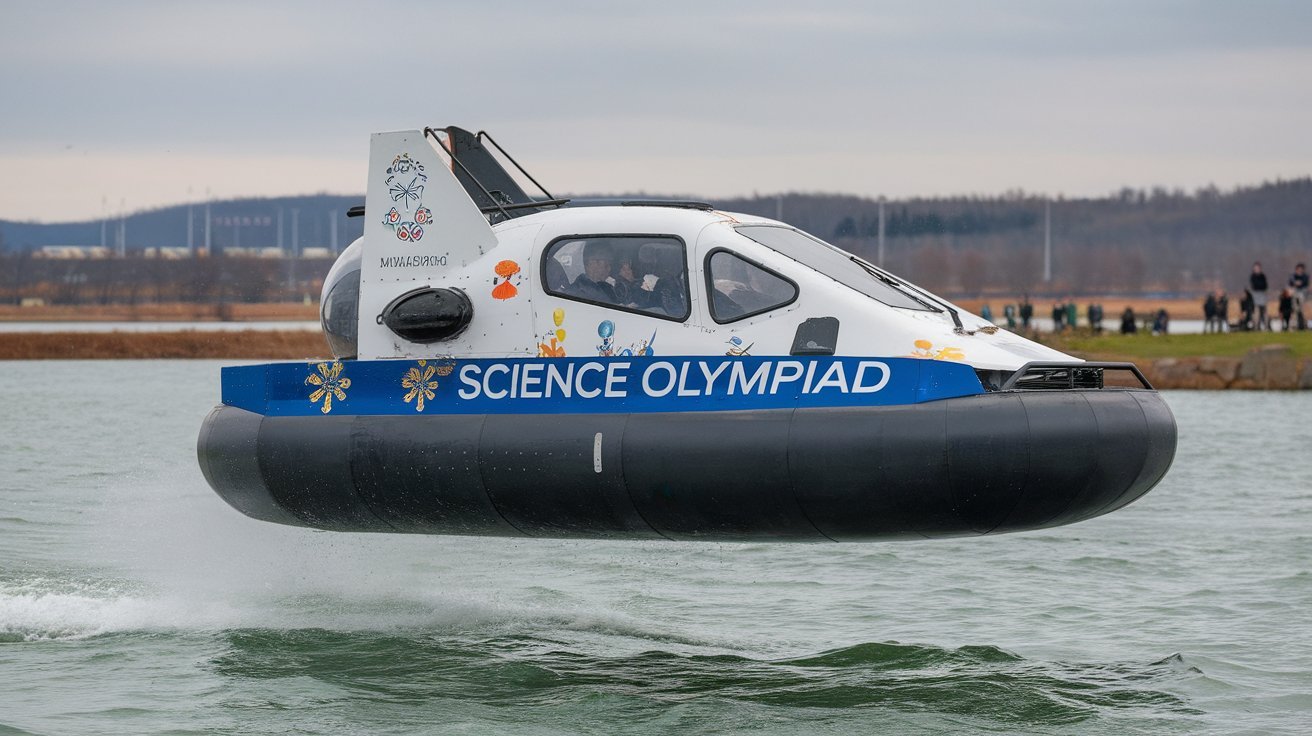
Building a hovercraft Science Olympiad is an exciting engineering challenge that combines physics, electronics, aerodynamics, design, and experimental testing. Unlike a typical science project, a Science Olympiad hovercraft must be designed not only to work but also to perform consistently under competition conditions.
For the 2026 Science Olympiad season, the Hovercraft event challenges students to design, construct, test, and calibrate a self-propelled, air-levitated vehicle that travels along a track. The goal is to create a machine that floats efficiently on an air cushion while achieving a strong competition score.
Whether you are just starting your first build or trying to improve an existing design, understanding the hovercraft principle, skirt design, propulsion, batteries, testing strategy, and official rules can make a major difference.
What Is the Science Olympiad Hovercraft Event?
The Science Olympiad Hovercraft event is an engineering competition in which teams build a small vehicle that travels while levitating on a cushion of air. The vehicle uses air pressure underneath its base to reduce contact with the track, while a propulsion system moves it forward.
The event is designed to test much more than construction skills. Students need to understand friction, pressure, force, mass, acceleration, electrical power, propulsion, stability, and experimental optimization.
Science Olympiad describes the event as requiring participants to design, construct, and calibrate a self-propelled air-levitated vehicle. Teams must therefore think like engineers rather than simply assembling a model from a kit.
The most successful approach is usually an iterative one: build, measure, modify, test, record, and repeat.
How Does a Hovercraft Work?
The basic science behind a hovercraft is relatively simple.
A fan or blower pushes air underneath the vehicle. The air becomes trapped beneath a flexible skirt, creating an area of increased pressure. This pressure produces an upward force that partially supports the weight of the vehicle.
Once the hovercraft is riding on an air cushion, friction with the track can become very small. A separate propulsion system can then push the vehicle forward.
There are three important systems to understand:
1. Lift system: Produces the air cushion underneath the vehicle.
2. Skirt system: Controls how air escapes and helps maintain pressure beneath the craft.
3. Propulsion system: Creates the forward force necessary to move the vehicle down the track.
A good competition hovercraft must balance these systems. More airflow is not automatically better. Excessive airflow can waste battery power, increase turbulence, or make the vehicle unstable.
Designing the Best Hovercraft for Science Olympiad
The ideal design should be lightweight, stable, efficient, and easy to adjust. A complicated vehicle is not necessarily a better vehicle.
Start with a rigid but lightweight base. Materials such as foam board, lightweight plastic, thin plywood, or other permitted construction materials can be considered depending on the current rules.
The center of mass is also important. If the weight is heavily concentrated toward one side, the skirt may not seal evenly. Uneven loading can cause air leakage and make the vehicle drift.
Keep major components positioned so that the craft remains balanced.
The skirt deserves special attention. Its purpose is to help contain air and create the air cushion. Small leaks are normal in many hovercraft designs, but uncontrolled leaks can dramatically reduce lift efficiency.
During testing, observe whether the vehicle sits level. If one corner is consistently lower, investigate the skirt, weight distribution, or airflow before increasing motor power.
Choosing Motors, Fans, and Batteries
The electrical system is one of the most important parts of a competitive Science Olympiad hovercraft.
A typical design may use one motor or fan for lifting air and another propulsion motor for forward movement. The exact configuration depends on the design and current rules.
The 2026 rules include restrictions concerning battery voltage and propulsion components, so competitors should check the official rules before selecting electronics.
Motor selection should focus on efficiency rather than maximum power. A powerful motor that quickly drains the battery may perform worse than a moderately powered motor that provides consistent thrust throughout the run.
Propeller and impeller safety is also critical. Components that rotate at high speed must be appropriately shielded according to the competition requirements.
Before competition, test the complete electrical system repeatedly. Check:
- Battery voltage
- Motor temperature
- Propeller balance
- Wiring connections
- Switch reliability
- Airflow
- Runtime
- Propulsion consistency
A hovercraft that works perfectly once but fails after several runs is not competition-ready.
Testing and Optimization Strategy
Testing is arguably the most important part of building a Science Olympiad hovercraft.
Do not change several variables simultaneously. If you change the skirt, motor power, weight, and propeller at the same time, you will not know which modification caused the improvement.
Instead, use controlled experiments.
For example, record the vehicle’s performance with three different lift-power settings. Keep the weight, battery, skirt, and propulsion system unchanged. Compare the results and determine which setting provides the best balance between lift and energy consumption.
Then test another variable.
Create a design log or testing spreadsheet containing measurements such as:
- Lift power
- Propulsion power
- Battery voltage
- Vehicle mass
- Runtime
- Travel time
- Distance traveled
- Number of incomplete runs
- Skirt configuration
- Environmental observations
Data allows you to make engineering decisions based on evidence instead of guesses.
Understanding the 2026 Science Olympiad Scoring
For 2026, the official Hovercraft rules use performance-based scoring involving distance and time, with additional scoring opportunities depending on the specific competition rules.
A complete run receives a full distance score, while the time component rewards a runtime close to the assigned Target Time (TT). This means simply making the vehicle as fast as possible may not produce the highest score.
That is an important strategic difference.
A vehicle that finishes significantly faster than the target can potentially score worse on the time component than a vehicle that finishes very close to the target.
The 2026 rules also describe a possible Bonus Run and Bonus Target Time under the applicable conditions. Construction and competition violations can reduce the scores earned during a run.
Because Science Olympiad rules can change and official clarifications take precedence, teams should always verify the current official Rules Manual, rules corrections, and FAQs before competition.
Common Hovercraft Problems and How to Fix Them
One common problem is that the hovercraft does not lift properly. Check for excessive weight, major skirt leaks, inadequate airflow, or an uneven base.
If the vehicle lifts but moves poorly, investigate the propulsion system. The propeller may not be producing enough useful thrust, or the airflow may be interfering with the lift system.
If the hovercraft constantly moves toward one side, inspect the skirt and weight distribution. A slightly uneven skirt can cause asymmetric airflow.
Battery problems are another frequent source of inconsistent performance. Batteries should be tested under realistic operating conditions rather than simply checking their voltage while disconnected.
Finally, avoid making last-minute major modifications at a tournament. The best competition vehicle is one that has already been tested extensively and understood thoroughly.
Final Tips for a Winning Science Olympiad Hovercraft
A successful hovercraft Science Olympiad is the result of careful engineering rather than one magical component.
Keep the design lightweight. Make the skirt reliable. Balance the vehicle carefully. Protect rotating components. Select efficient motors. Test batteries under load. Record every meaningful experiment.
Most importantly, optimize for the actual scoring system, not simply for maximum speed.
Teams should also become familiar with their vehicle’s behavior. Know how it reacts to different batteries, surface conditions, lift settings, and propulsion settings. Practice making small adjustments quickly and safely.
The 2026 Hovercraft event provides an excellent opportunity to apply classroom science to a real engineering problem. By combining air pressure, friction reduction, propulsion, electronics, data analysis, and careful experimentation, students can transform a simple-looking model into a sophisticated competition machine.
Before finalizing your design, always compare it against the current official Science Olympiad rules, because the official Rules Manual and published clarifications—not older build guides—determine what is legal at competition.

A Whirlpool washer not spinning can quickly turn an ordinary laundry cycle into a frustrating problem, especially when clothes come out soaking wet or water remains inside the tub. Fortunately, a washer that refuses to spin does not always have a serious mechanical failure. Whirlpool’s own troubleshooting guidance identifies several common causes, including unbalanced loads, incorrect spin settings, excessive detergent, drainage problems, leveling issues, power interruptions, and lid or door-lock concerns.
Before assuming that the motor, transmission, or control board has failed, we should start with the simplest possibilities. A few checks can often restore normal operation without replacing any parts. At the same time, recognizing when the problem requires professional service can prevent further damage and make troubleshooting considerably safer.
Why Is My Whirlpool Washer Not Spinning?
The first step is to determine exactly what “not spinning” means. A Whirlpool washer may spin slowly, stop before reaching maximum speed, refuse to spin at all, or complete the cycle while leaving clothes unusually wet. These symptoms can have different causes.
An unbalanced or overloaded load is one of the most common explanations. When clothing becomes concentrated on one side of the basket, the washer may detect excessive movement and reduce or stop the spin cycle. Whirlpool explains that an unbalanced load can produce loud noises, vibration, longer cycle times, reduced spin speed, and wet clothing at the end of the cycle.
The selected cycle can also make the washer appear to malfunction. Low Spin, No Spin, Delicate, or Hand Wash settings intentionally use slower spin speeds, so more moisture may remain in the laundry. Selecting an appropriate higher-spin cycle or Drain & Spin, where available, may resolve the problem.
Check the Load, Spin Setting, and Washer Level
When a Whirlpool washer is not spinning properly, begin by opening the washer only when it is safe to do so and examining the load. Remove some clothing if the basket is tightly packed, then redistribute the remaining items evenly. Avoid washing one large blanket, towel, coat, or other bulky item by itself because a single heavy object can create an imbalance.
Whirlpool recommends avoiding tightly packed loads because excessive weight and uneven distribution can reduce spin performance. For some bulky loads, adding suitable items can help distribute weight more evenly.
Next, check the selected spin speed. A gentle or delicate cycle may be working exactly as designed rather than malfunctioning. If the clothing is appropriate for a faster spin, selecting Drain & Spin can help remove remaining water.
The washer itself should also be level. An appliance that sits unevenly can experience excessive vibration and difficulty maintaining a balanced spin. Whirlpool specifically recommends checking and adjusting the washer according to the model’s installation instructions.
Check the Drain Hose and Standing Water
A Whirlpool washer not spinning may actually have a drainage problem. If water cannot leave the tub properly, the machine may not proceed normally into or through the high-speed spin stage. Standing water after the cycle is an important clue.
Inspect the drain hose for obvious kinks, crushing, or improper installation. Whirlpool notes that a clogged, kinked, or incorrectly installed drain hose can prevent complete drainage and affect the spin cycle.
Drain-hose installation requirements vary by model, so the owner’s manual should be used for exact measurements. Whirlpool’s general guidance states that many of its washers require the drainpipe to be positioned within a specified height range, with requirements varying by model.
Front-load washers may also have an accessible drain-pump filter, depending on the model. Small objects such as coins or other debris can interfere with drainage. Before inspecting any filter or pump area, disconnect the washer from power and follow the model-specific instructions.
Do Not Overlook Detergent and Excessive Suds
Another surprisingly common reason for a Whirlpool washer not spinning correctly is too much detergent. Excessive detergent can create an unusually large amount of suds, and those suds can interfere with proper draining and spinning.
Whirlpool recommends using the appropriate HE detergent in high-efficiency washers and following the detergent manufacturer’s recommended quantity. More detergent does not necessarily mean cleaner clothes. In fact, excessive soap can create performance problems and leave laundry wetter than expected.
If the washer repeatedly produces excessive suds, reducing detergent to the recommended amount and selecting the appropriate cleaning or rinse procedure for the model may help. Always follow the owner’s manual because Whirlpool washer designs and controls differ between models.
Check the Lid Lock, Door, and Power Supply
For many top-load Whirlpool washers, the lid must be properly closed and latched before the machine can complete certain parts of the cycle. Whirlpool explains that newer top-load models may require the lid to be closed for filling, washing, draining, rinsing, and spinning.
Inspect the lid area for clothing, lint, detergent residue, or other material that could interfere with the latch. Whirlpool also recommends checking for visible obstructions around the locking mechanism.
A power interruption can also affect spinning. If electricity was interrupted during the cycle, the washer may not reach its intended final spin speed. Whirlpool recommends running an appropriate spin or drain-and-spin cycle afterward when necessary.
If the washer appears completely unpowered, verify that the power cord is correctly connected to a grounded outlet and that the household electrical supply is functioning. Whirlpool advises against using an extension cord for the washer.
How to Reset a Whirlpool Washer That Will Not Spin
If basic checks do not solve the issue, a power reset may be worth trying. Whirlpool’s troubleshooting guidance for certain lid-lock and control problems recommends disconnecting the washer from its power source for approximately five minutes, then reconnecting it.
After reconnecting the appliance, allow the washer to initialize before selecting an appropriate cycle. Redistribute the laundry if necessary and try Drain & Spin when the model provides that option.
However, a reset should not be treated as a permanent repair. If the washer repeatedly stops spinning after a reset, displays an error code, makes unusual mechanical noises, or fails to drain, the underlying problem may require further diagnosis.
When a Whirlpool Washer Needs Professional Repair
If the washer still will not spin after checking the load, cycle settings, drain system, level, detergent, lid or door, and power supply, the problem may involve an internal component. Depending on the model and symptoms, potential causes can include a drive system problem, motor issue, actuator or shifter problem, pump failure, door/lid-lock failure, wiring fault, or control-board issue.
At this point, repeatedly restarting the washer or attempting to dismantle components without the proper instructions is not recommended. Electrical and mechanical parts can present safety risks, and the correct diagnostic procedure varies considerably between Whirlpool models.
A technician can use the model number and displayed error codes to identify the appropriate service procedure. Whirlpool itself directs users to model-specific manuals and service resources when basic troubleshooting does not resolve the issue.
Final Thoughts
A Whirlpool washer not spinning does not automatically mean that the appliance needs an expensive repair. In many situations, the cause is relatively simple: an unbalanced load, overloaded basket, incorrect spin selection, excessive detergent, drainage restriction, unlevel installation, power interruption, or lid/door-lock issue. Whirlpool’s official troubleshooting resources specifically highlight these areas as important checks.
The best approach is to work through the possibilities systematically. Start with the load and cycle settings, then check drainage, leveling, detergent, power, and the lid or door lock. If the problem continues despite these checks, professional diagnosis is the safer choice. By identifying the symptoms accurately and following model-specific Whirlpool guidance, we can often determine whether the problem is a simple operating issue or a genuine mechanical repair.

The 2026 Toyota Corolla Hatchback continues to combine compact dimensions, practical hatchback utility, sporty styling, efficient performance, and modern technology in one approachable package. For drivers who want something more distinctive than a traditional compact sedan without moving into a larger crossover, the Corolla Hatchback remains an appealing choice. For the 2026 model year, Toyota offers the hatchback in SE, FX, and XSE grades, with a 2.0-liter Dynamic Force four-cylinder engine, a continuously variable transmission, and a strong collection of standard safety and connectivity features.
With a starting MSRP of $24,580 on Toyota’s current U.S. consumer site, the 2026 Corolla Hatchback occupies an interesting position for shoppers looking for a reasonably priced new car with sporty character. The lineup also introduces the limited-production FX Edition, which adds distinctive styling and interior upgrades for buyers who want something more exclusive.
2026 Toyota Corolla Hatchback Price and Trim Levels
The 2026 Toyota Corolla Hatchback lineup is designed around three different personalities. The SE serves as the entry point, while the FX adds special styling and equipment, and the XSE sits at the top of the range with additional comfort, technology, and performance-oriented features.
Toyota currently lists the 2026 Corolla Hatchback SE at $24,580, the FX at $27,180, and the XSE at $27,575 before applicable destination charges, taxes, dealer fees, and options. The SE is rated at an estimated 32 mpg city and 41 mpg highway, while the FX and XSE are rated at approximately 30 mpg city and 38 mpg highway.
The SE makes sense for buyers who prioritize value and fuel economy. The FX is aimed at customers who want a more expressive appearance, while the XSE provides a more premium experience with features such as heated sport seats, dual-zone automatic climate control, and additional technology.
Engine, Performance, and Driving Experience
Under the hood, the 2026 Toyota Corolla Hatchback uses a 2.0-liter Dynamic Force four-cylinder engine producing 169 horsepower and 151 lb.-ft. of torque. Power is delivered through Toyota’s Dynamic-Shift continuously variable transmission, while paddle shifters and selectable driving modes add a more engaging element to the driving experience.
Toyota provides Normal, Sport, and Eco driving modes, allowing drivers to adjust the character of the vehicle according to the situation. Sport mode is particularly relevant to the Corolla Hatchback’s personality because the car is designed to feel more agile and responsive than a basic economy-focused compact.
The hatchback’s compact dimensions also make it well suited to urban driving. Its relatively small footprint can make parking and maneuvering easier, while the hatchback body provides practical access to the rear cargo area. Toyota’s TNGA-C platform contributes to the vehicle’s handling characteristics, with a low center of gravity and suspension tuning intended to balance ride comfort with responsive handling.
2026 Corolla Hatchback FX: The New Sporty Edition
One of the most interesting elements of the 2026 lineup is the Corolla Hatchback FX Edition. Toyota announced that the FX would bring a more distinctive appearance and several exclusive details to the hatchback range.
The FX features 18-inch gloss-white-finished alloy wheels, a black vented sport wing, black badging, and other exterior details that give it a noticeably sportier visual identity. Inside, it receives sport touring seats with orange stitching, with the contrasting color treatment continuing onto other interior elements.
Toyota has also stated that only 1,600 Corolla Hatchback FX Editions are being assembled for the U.S. market for the 2026 model year. That limited production makes the FX particularly interesting for buyers who want a Corolla Hatchback that looks less conventional and potentially feels more collectible than a standard trim.
Interior, Cargo Space, and Technology
Inside, the 2026 Toyota Corolla Hatchback focuses on straightforward functionality while adding the technology expected in a modern compact car. The vehicle comes with an 8-inch Toyota Audio Multimedia touchscreen, wireless Apple CarPlay and Android Auto compatibility, Bluetooth connectivity, and a six-speaker audio system.
The hatchback body is one of its biggest practical advantages. Rear seats can fold down in a 60/40 split configuration, giving owners more flexibility when transporting larger objects. Toyota also lists up to 23.0 cubic feet of cargo volume for the Corolla Hatchback.
Higher trims add equipment designed to make everyday driving more comfortable. The XSE includes dual-zone automatic climate control, a 7-inch digital gauge cluster, heated front sport seats, an eight-way power-adjustable driver’s seat, and SofTex-trimmed seating surfaces. JBL premium audio is also available as part of the upper-level equipment.
Safety Features and Driver Assistance
Safety remains a major selling point of the 2026 Corolla Hatchback. Toyota equips the vehicle with Toyota Safety Sense 3.0, a suite of driver-assistance technologies intended to help drivers identify and respond to potential hazards.
The system includes features such as Pre-Collision System with Pedestrian Detection, Full-Speed Range Dynamic Radar Cruise Control, Lane Departure Alert, Lane Tracing Assist, Automatic High Beams, Road Sign Assist, and Proactive Driving Assist, depending on the applicable equipment and configuration.
Another important 2026 update is the availability of Blind Spot Monitor with Rear Cross-Traffic Alert as standard equipment across all grades. Toyota also made a wireless smartphone charger standard across the lineup, strengthening the technology package without requiring buyers to move immediately to the most expensive trim.
These features do not replace attentive driving, but they add another layer of assistance during everyday commuting, highway travel, parking, and lane changes.
Fuel Economy and Everyday Practicality
Fuel efficiency is another reason the 2026 Toyota Corolla Hatchback remains relevant in the compact-car market. The SE delivers an EPA-estimated 32 mpg city, 41 mpg highway, and 35 mpg combined, according to Toyota’s published information. The FX and XSE are rated at approximately 30/38 mpg city/highway.
These figures make the Corolla Hatchback particularly attractive to commuters who want sporty styling without accepting the fuel consumption associated with larger performance vehicles. The car’s compact size, hatchback practicality, and efficient four-cylinder engine create a combination that works well for city driving, commuting, weekend trips, and everyday errands.
Another advantage is the straightforward gasoline powertrain. Unlike the 2026 Corolla sedan, which is also available with a hybrid system, the Corolla Hatchback lineup uses the 2.0-liter gasoline engine. Buyers who specifically want a hatchback with a hybrid powertrain will therefore need to consider alternatives.
Is the 2026 Toyota Corolla Hatchback Worth Considering?
The 2026 Toyota Corolla Hatchback is a strong choice for buyers who want a compact car that combines efficiency, practicality, technology, safety, and sporty styling. The SE provides the strongest value and fuel-economy combination, while the FX stands out through its limited production and distinctive appearance. The XSE is the natural choice for customers who want additional comfort and premium features.
Its 169-horsepower engine is not designed to turn the Corolla Hatchback into a high-performance sports car, but it provides enough output for everyday driving while maintaining impressive fuel economy. The hatchback body also gives it an advantage over conventional sedans when versatility matters.
For 2026, Toyota has strengthened the formula with the new FX Edition and standard safety and convenience equipment. With its competitive pricing, modern connectivity, efficient powertrain, and recognizable Toyota practicality, the 2026 Toyota Corolla Hatchback remains one of the more interesting compact hatchbacks for drivers who want everyday usability without giving up personality. Specifications, pricing, equipment availability, and regional offerings can vary, so buyers should confirm the exact configuration with Toyota or a local dealer before purchasing.



 Lifestyle2 months ago
Daily Living Tools That Make Life Easier for Seniors
- Celebrity2 months ago
Edith Sarfati: A Closer Look at Her Life, Career, Family, and Lasting Legacy
- Business2 months ago
TravelTweaks Offers 2026 | Complete Guide to Travel Deals, Discounts & Smart Travel Planning
- Blog2 months ago
RTI Scheduler: The Complete Guide to Flexible Student Scheduling in Modern Schools
- Business2 months ago
Latest News MyGreenBucksNet (2026): Complete Guide to Platform Updates, Features, Earnings, and User Experience
- Technology2 months ago
AICOT: Transforming the Future of Artificial Intelligence and Connected Technology
- Entertainment2 months ago
Bodenxt: A Complete Guide to Features, Benefits, Applications, and Future Potential
- Celebrity2 months ago
Toni Camille: Biography, Career, Achievements, Personal Life, and Growing Public Interest in 2026