Blog
Ford Maverick 2024: Complete Guide to Features, Engine, Towing, Fuel Economy, and Interior

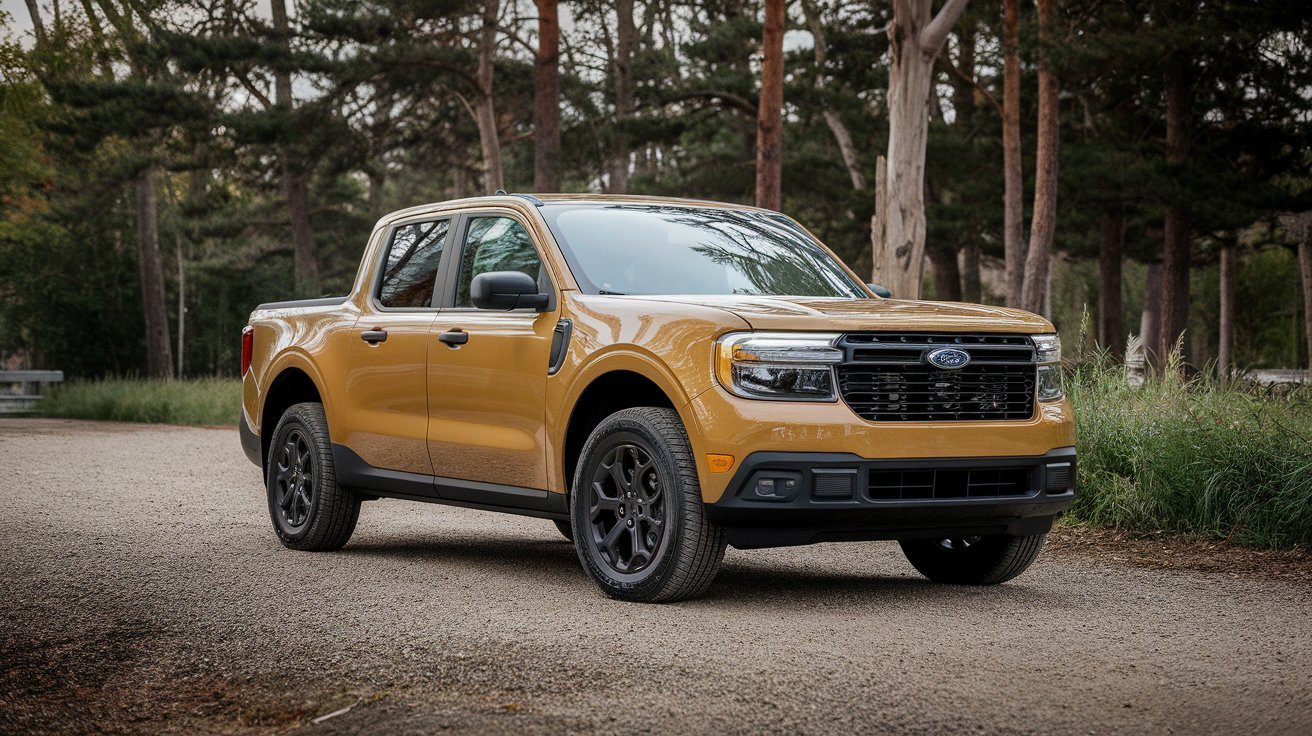
The Ford Maverick 2024 is a compact pickup designed for drivers who want the usefulness of a truck without the size, weight, and footprint of a traditional full-size pickup. Built with a unibody platform rather than the body-on-frame construction used by larger trucks, the Maverick combines a practical pickup bed with a relatively compact exterior and car-like driving characteristics. The 2024 model year is especially notable because Ford made the 2.0-liter EcoBoost turbocharged engine the standard powertrain, while the fuel-efficient hybrid became an option.
The Maverick is available as a four-door SuperCrew pickup with seating for five. It offers two distinct powertrains, front-wheel drive or available all-wheel drive depending on configuration, useful towing capability, and a flexible cargo bed. For buyers researching the Ford Maverick 2024 in 2026, its combination of compact dimensions, truck utility, and available hybrid efficiency remains central to its appeal.
Ford Maverick 2024 Engine and Performance
The 2024 Maverick offers two main powertrain choices. The standard engine is a 2.0-liter EcoBoost turbocharged four-cylinder producing 250 horsepower, paired with an eight-speed automatic transmission. Front-wheel drive is standard with this engine, while all-wheel drive is available.
The alternative is Ford’s 2.5-liter hybrid powertrain, combining a four-cylinder gasoline engine with electric motors for a total system output of 191 horsepower. The hybrid uses a continuously variable transmission and, for 2024, is configured with front-wheel drive.
These two engines give the Maverick two distinctly different personalities. The hybrid emphasizes fuel efficiency and smooth everyday operation, while the 2.0-liter EcoBoost provides substantially more horsepower and is the choice for buyers who prioritize acceleration, all-wheel drive, or increased towing capability.
Car and Driver testing of a 2024 Maverick hybrid recorded 7.4 seconds from zero to 60 mph, while its testing of an AWD EcoBoost Maverick produced quicker acceleration.
Ford Maverick 2024 Fuel Economy
Fuel economy is one of the defining characteristics of the Ford Maverick 2024, particularly with the hybrid powertrain. Car and Driver lists EPA figures of approximately 37 mpg combined, 42 mpg city, and 33 mpg highway for the front-wheel-drive hybrid.
The turbocharged EcoBoost model uses more fuel but provides greater performance. Car and Driver lists approximately 26 mpg combined and 30 mpg highway for the front-wheel-drive turbo model, while all-wheel-drive versions are rated lower.
Real-world fuel economy can differ considerably based on driving style, weather, traffic, payload, tire selection, terrain, and drivetrain. In a long-term 2024 Maverick Hybrid test, Car and Driver recorded an overall 34 mpg after 40,000 miles, with a 33-mpg result in its 75-mph highway testing.
This efficiency gives the Maverick an unusual position among pickup trucks. It can perform many everyday truck duties while consuming considerably less fuel than many larger pickups.
Ford Maverick 2024 Towing and Payload Capability
Despite its compact dimensions, the Ford Maverick 2024 provides meaningful towing capability. Ford’s official 2024 towing guide lists the hybrid with a maximum loaded trailer weight of 2,000 pounds. The 2.0-liter EcoBoost can also tow 2,000 pounds in standard configurations, while an appropriately equipped EcoBoost with the available towing setup can reach 4,000 pounds.
The available 4K Tow Package is therefore an important consideration for anyone planning to pull a trailer. Buyers should verify that a particular Maverick has the correct engine, drivetrain, axle configuration, and towing equipment before assuming it has the 4,000-pound maximum.
The Maverick’s towing ability makes it suitable for jobs such as pulling a small utility trailer, recreational equipment, or other appropriately sized loads. It is not intended to replace a heavy-duty pickup for large trailers or demanding commercial towing.
The truck bed itself is another important advantage. Although it is considerably smaller than the beds of many full-size pickups, its dimensions and available features make it useful for home-improvement projects, gardening equipment, bicycles, camping gear, tools, and recreational equipment.
Maverick Interior, Seating, and Technology
The Ford Maverick 2024 is a five-passenger pickup with a four-door SuperCrew cabin. Its relatively small exterior dimensions help make it easier to maneuver in urban environments while still providing useful rear-seat space. The cabin uses plenty of hard plastic materials, with Ford emphasizing functionality and clever storage rather than traditional luxury appointments.
The standard infotainment system includes an 8-inch touchscreen, along with wired Apple CarPlay and Android Auto. Higher trims can add equipment designed to improve comfort and convenience.
The Maverick’s interior also includes several practical storage solutions. Door compartments, under-seat storage, and other spaces allow owners to organize smaller equipment that might otherwise move around the cabin.
Depending on trim and options, buyers can add features such as heated seats, heated mirrors, remote start, an eight-way power driver’s seat, upgraded audio equipment, and additional driver-assistance technology. The available XLT Luxury Package, for example, adds several comfort and utility features, including heated seats and mirrors and a 110-volt inverter.
2024 Maverick Trims and Available Configurations
The Ford Maverick 2024 was offered in several configurations designed for different types of buyers. The lineup included XL, XLT, and Lariat, with specialized packages such as the Tremor available for buyers seeking additional off-road capability.
The XL is the entry-level model and focuses heavily on basic truck functionality. The XLT adds additional convenience and appearance equipment and can be paired with packages that significantly expand its features. The Lariat moves further toward a more premium cabin and technology experience.
The Tremor package is designed for drivers who want more capability away from paved roads. Car and Driver notes that the Tremor includes a raised stance, taller all-terrain tires, and a torque-vectoring rear differential.
Choosing between the trims depends heavily on how the truck will be used. A basic XL can make sense for straightforward transportation and work duties, while an XLT or Lariat can provide additional comfort for daily driving. Buyers who regularly travel on rougher terrain may instead focus on the Tremor configuration.
Maverick Bed, Dimensions, and Everyday Practicality
One of the defining characteristics of the Ford Maverick 2024 is its compact footprint. Car and Driver lists a wheelbase of approximately 121.1 inches, a length of 199.7 inches, and a width of 72.6 inches for the tested hybrid.
Those dimensions make the Maverick significantly easier to place in tight parking spaces and narrow urban environments than many larger pickups. The relatively low footprint also contributes to the vehicle’s car-like driving character.
The bed is another major part of its functionality. Ford designed it to support practical loading and organization rather than simply maximizing size. Owners can use the bed for household projects, outdoor activities, and recreational equipment without needing a full-size truck.
The Maverick’s combination of a five-passenger cabin and functional pickup bed is particularly useful for people who need occasional truck capability but spend most of their time commuting.
Ford Maverick 2024: What Makes It Different?
The Ford Maverick 2024 occupies a distinctive place in the pickup market because it does not attempt to imitate a full-size truck. Instead, its smaller dimensions, unibody construction, available hybrid powertrain, and practical bed are central to its design. Edmunds describes it as a compact pickup using a unibody platform derived from Ford’s Bronco Sport architecture.
The hybrid is especially notable for its 37-mpg combined EPA rating, while the turbocharged engine provides 250 horsepower and can be paired with AWD. The EcoBoost configuration can also achieve up to 4,000 pounds of towing capacity when properly equipped.
The Maverick also has a strong record of long-term usability in independent testing. In Car and Driver’s 40,000-mile hybrid test, the truck averaged 34 mpg overall, and the publication reported that the vehicle continued to feel solid and functional at the conclusion of the test.
Final Thoughts on the Ford Maverick 2024
The Ford Maverick 2024 is a compact pickup that combines several qualities rarely found together: five-passenger seating, a useful cargo bed, available hybrid efficiency, turbocharged performance, optional AWD, and up to 4,000 pounds of towing capability when properly equipped.
Its hybrid powertrain makes it particularly distinctive for drivers who want pickup functionality without the fuel consumption associated with many larger trucks. The 2.0-liter EcoBoost provides a different approach, offering more power and the ability to access AWD and higher towing capacity.
For someone researching a Ford Maverick 2024 in 2026, the most important considerations are the exact powertrain, drivetrain, trim, packages, towing equipment, maintenance history, and intended use. Whether configured as an efficient hybrid commuter or an AWD EcoBoost truck with the available towing package, the Maverick demonstrates how a pickup can deliver genuine utility while remaining compact, maneuverable, and practical for everyday driving.
If you are searching for Connections NYT Mashable, you are probably looking for today’s hints, categories, words, and answers for the popular New York Times word puzzle. NYT Connections challenges players to sort 16 seemingly unrelated words into four groups of four, with each group sharing a hidden connection. Some categories are straightforward, while others rely on wordplay, names, prefixes, suffixes, or unexpected meanings.
For Wednesday, September 16, 2026, the current puzzle is Connections #1193. Today’s board includes words such as LATIN, PENNYWISE, NICKELODEON, BORAT, QUARTERBACK, MARIGOLD, BARRETT, and FRANK-N-FURTER. The four categories involve metal elements, U.S. coins, poets’ middle names, and sausages plus one letter. Current puzzle guides independently report the same solution.
What Is NYT Connections?
NYT Connections is a daily word game from The New York Times in which players receive a grid containing 16 words. The objective is to identify four groups, with exactly four words belonging to each group. The challenge comes from finding the intended relationship while avoiding tempting connections that the puzzle deliberately places on the board.
The groups are commonly represented by four colors based on difficulty: yellow, green, blue, and purple. Players receive up to four mistakes, so choosing a group that merely seems plausible can be costly.
Unlike Wordle, which focuses on identifying one five-letter word, Connections requires players to think about relationships between multiple words. A word may appear to fit two different categories, creating one of the game’s most common traps. Today’s puzzle demonstrates that design particularly well because several entries look like names of fictional characters, brands, or people while actually belonging to completely different categories.
Connections NYT Mashable Hints for Today
If you want to solve today’s puzzle without immediately seeing all the answers, start with these spoiler-light hints.
Yellow hint: Think about the periodic table and what can appear at the ends of words.
Green hint: Think about American money, particularly familiar U.S. coins.
Blue hint: Think about poets and the middle portions of their full names.
Purple hint: Think about sausages, then consider what happens when a single letter is added.
These clues provide the central ideas without giving away every word. Parade similarly describes today’s four concepts as words ending in metal elements, words beginning with U.S. coins, poets’ middle names, and sausages with an extra letter.
The important strategy is to avoid forcing a word into a category simply because it seems to fit. Connections is designed around overlapping possibilities, so waiting until you can identify four words that share a precise relationship is often safer.
Today’s Connections Answers: September 16, 2026
Spoiler warning: The complete solutions appear below.
The four groups in Connections #1193 are:
Yellow: Ending in Metal Elements
- LATIN
- LONG JOHN SILVER
- MARIGOLD
- STEAM IRON
Each entry ends with the name of a metal element. LATIN ends with “tin,” LONG JOHN SILVER ends with “silver,” MARIGOLD ends with “gold,” and STEAM IRON ends with “iron.”
Green: Starting With U.S. Coins
- DIMENSION
- NICKELODEON
- PENNYWISE
- QUARTERBACK
The beginnings of these words contain familiar U.S. coin names: dime, nickel, penny, and quarter. This is a good example of how Connections can hide a category inside only part of a word.
Blue: Poets’ Middle Names
- BARRETT
- CARLOS
- ST. VINCENT
- WADSWORTH
These are middle names associated with famous poets, including Elizabeth Barrett Browning, William Carlos Williams, Edna St. Vincent Millay, and Henry Wadsworth Longfellow. The category requires knowledge of full names rather than simply recognizing the words individually.
Purple: Sausages Plus a Letter
- BORAT
- CLINK
- FRANK-N-FURTER
- WIDENER
This category uses wordplay. Each entry is connected to a sausage term with an additional letter: brat, link, frankfurter, and wiener. This is the type of construction that can make the purple category particularly difficult to spot.
How to Solve Connections Without Spoilers
The best way to approach NYT Connections is to look for the most obvious relationship first. Once you find a possible group, test all four words carefully before submitting it.
Do not assume that two or three related words automatically identify a category. The fourth word is often deliberately hidden among several decoys. Today’s PENNYWISE, for example, may make players think of fictional characters, while NICKELODEON might encourage a television-related association. Their actual connection is the coin hidden at the beginning of each word.
It is also useful to examine word structure, not just meaning. Look at beginnings, endings, abbreviations, embedded words, sounds, and names. Today’s metal-elements group and U.S.-coin group both demonstrate why paying attention to portions of words can reveal a category.
If you have already identified three groups, the remaining four words can sometimes reveal the final category through elimination. However, elimination works best after the first three groups have been confirmed rather than guessed.
Why Connections NYT Hints Are So Popular
Searches for Connections NYT Mashable, Connections hints today, and NYT Connections answers are popular because the puzzle can be considerably harder than it first appears. A player may recognize several relationships but still struggle to determine which four words belong together.
Daily hint guides allow players to control how much help they receive. Someone who wants to preserve the challenge can read only the broad category clues. A player who has already tried several combinations can continue to the specific groups and finally the complete answers.
This format is especially helpful because Connections contains intentional decoys. The puzzle is not simply asking which words have something in common. It is asking which words share the specific relationship chosen by the puzzle’s editor.
Today’s board is a good illustration. Words such as BORAT, PENNYWISE, and FRANK-N-FURTER can all evoke entertainment or fictional characters, but those apparent similarities are distractions. Their intended relationships belong to different categories.
It is worth noting that the current Mashable page could not be directly verified in the search because Mashable was blocked by robots.txt. Therefore, the September 16 puzzle details in this article are based on independently matching current sources rather than being presented as a direct quotation or verified Mashable article.
Frequently Asked Questions About Connections NYT Mashable
What is today’s Connections puzzle?
Today’s puzzle is Connections #1193, dated September 16, 2026. It contains 16 words that must be divided into four groups of four.
What are today’s Connections categories?
The categories are ENDING IN METAL ELEMENTS, STARTING WITH U.S. COINS, POETS’ MIDDLE NAMES, and SAUSAGES PLUS A LETTER.
What are today’s Connections answers?
The complete groups are LATIN, LONG JOHN SILVER, MARIGOLD, STEAM IRON; DIMENSION, NICKELODEON, PENNYWISE, QUARTERBACK; BARRETT, CARLOS, ST. VINCENT, WADSWORTH; and BORAT, CLINK, FRANK-N-FURTER, WIDENER.
How many mistakes can you make in Connections?
Players can make four mistakes before the puzzle ends. This makes it important to confirm a suspected category before submitting it.
When does a new Connections puzzle appear?
A new puzzle is released daily at midnight, with the exact rollover based on the player’s time zone.
Conclusion
The search term Connections NYT Mashable is useful for players looking for daily clues and solutions to the New York Times’ increasingly popular word-association game. For September 16, 2026, Connections #1193 features four clever categories involving metal elements, U.S. coins, poets’ middle names, and sausages plus one letter.
The full solution demonstrates why Connections requires more than ordinary vocabulary. Players must examine meanings, word beginnings, word endings, names, and hidden constructions while resisting tempting false connections. Starting with the most obvious category, checking every word carefully, and saving the more ambiguous groups for later can make future puzzles easier to solve.
Whether you want a subtle Connections hint today or the complete answer list, understanding the puzzle’s construction is one of the best ways to improve. The key is to search for the specific intended connection, not simply any connection that happens to exist between four words.
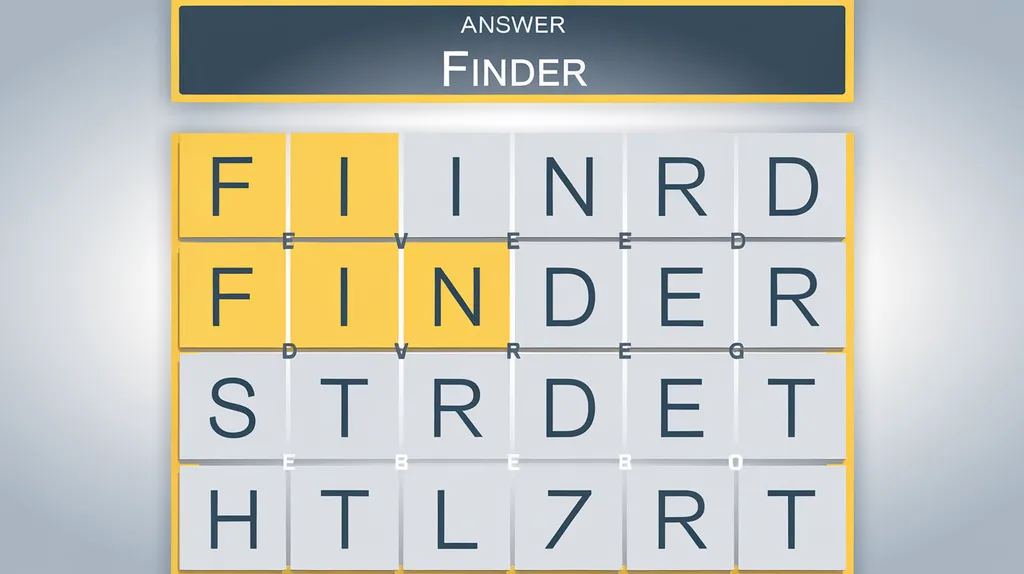
A Wordle Finder can be a useful tool for players who are stuck on a difficult five-letter puzzle and want to narrow down the possible answers without immediately giving up. Whether you need a definition, a starting letter, a list of possible words, or help interpreting Wordle’s colored tiles, a good finder can turn a frustrating puzzle into a manageable word challenge. In 2026, Wordle continues to attract daily players who use hints, word lists, archives, and solving strategies to protect their streaks.
The basic idea behind a Wordle Finder is simple: enter the information you already know, such as letters in the correct positions, letters that are present but misplaced, and letters that have been eliminated. The finder then helps narrow the possibilities. Today’s Wordle, for example, is puzzle #1915, with the answer WISPY, according to multiple current puzzle guides.
What Is a Wordle Finder?
A Wordle Finder is a word-solving resource designed to help players identify possible five-letter words based on the clues they receive during a Wordle game. Instead of randomly entering guesses, players can use the known information from the board to reduce the number of possible solutions.
Wordle gives players six attempts to discover a hidden five-letter word. After every guess, colored feedback shows how each letter relates to the solution. A correctly positioned letter is marked green, a letter that appears in the answer but is in the wrong position is marked yellow, and a letter that does not belong in the answer is marked gray.
A finder essentially turns this feedback into a set of rules. For example, if you know that the answer starts with W, contains I and S, ends in Y, and does not contain A, E, or O, you can search for words satisfying those conditions. This is particularly useful when several possible words look similar.
A Wordle Finder can therefore function as a word search tool, vocabulary assistant, clue solver, or answer checker, depending on how you use it.
How a Wordle Finder Works
The most useful Wordle finders allow players to enter several types of information. The first is known letters. If a letter appears green in the Wordle grid, you know both the letter and its exact position.
The second category is misplaced letters. Yellow letters are part of the answer but cannot remain in the position where you originally guessed them. A finder can use that information to eliminate words that place the letter incorrectly.
The third category is excluded letters. Gray letters generally indicate that those letters are not present, although players must pay attention to Wordle’s duplicate-letter rules when interpreting gray feedback.
This matters because repeated letters can appear in Wordle answers. Current Wordle guides specifically warn players not to eliminate a letter too quickly simply because it has already appeared in an unsuccessful position.
The more accurate information you enter, the smaller the possible word list becomes. This makes a finder especially valuable during the fourth, fifth, or sixth guess, when there is less room for experimentation.
Wordle Finder Example: Today’s Puzzle
Today’s puzzle provides a good example of how a Wordle Finder can work.
For September 16, 2026, Wordle is #1915. The answer is WISPY. Current guides describe it as an adjective associated with something small, thin, light, delicate, or fleeting. The word begins with W, contains one vowel and four consonants, and has no repeated letters.
If you were solving this puzzle before seeing the answer, you could enter the available information gradually:
- Five letters
- Starts with W
- Ends with Y
- One vowel
- No repeated letters
- Meaning connected with something thin or delicate
Those clues substantially narrow the possibilities.
The meaning of WISPY also explains why it can describe hair, smoke, clouds, or other things that appear thin and delicate. Forbes’ current Wordle guide discusses the word’s connection with hair and aging and explains its origin from “wisp.”
This illustrates an important point: a Wordle Finder is most effective when combined with logical deduction and vocabulary knowledge, rather than being treated as a button that simply reveals an answer.
How to Use a Wordle Finder Without Spoiling the Game
Many players do not actually want the answer immediately. They want a small amount of help so they can finish the puzzle independently. For this reason, a progressive hint strategy can be more enjoyable than revealing the complete solution.
Start with the broadest clue. You might look for the definition or general meaning of the word. If that does not help, reveal the first letter. Next, check the number of vowels or whether any letters repeat.
You can then use a word finder to create a shortlist rather than reveal the final solution. Examine the remaining words and decide which one best matches the clues from your Wordle board.
This approach preserves the problem-solving aspect of Wordle. You are still making the final decision rather than simply copying an answer.
Players should also remember that Wordle answers can occasionally contain repeated letters. Treating every gray tile as an absolute indication that the letter cannot occur again can lead to incorrect deductions when a letter has appeared elsewhere in the same guess.
Best Strategies for Finding Wordle Answers
A Wordle Finder becomes more useful when paired with a strong solving strategy. One of the most important techniques is choosing an opening word that tests several common letters.
Common vowels such as A, E, I, and O can quickly reveal the structure of an unknown word. Frequently occurring consonants can also provide valuable information. Some players prefer words designed to test vowels, while others favor balanced words containing a mixture of common consonants and vowels.
After the first guess, avoid repeating letters that have already been ruled out. Instead, use the second guess to test several new letters whenever the board provides little information.
When you have one or two green letters, start thinking about word patterns rather than individual letters. For example, if the board gives you W—Y, consider common five-letter structures that match both the available letters and the meaning suggested by the clues.
It is also important not to assume that the most familiar word is automatically correct. Wordle can occasionally use less common vocabulary, which is why a broad word list can be useful when you have narrowed the possibilities substantially.
Wordle Finder, Word Lists and Past Answers
Another major use for a Wordle Finder is checking historical answers. A past-answer archive can help players understand which words have already appeared and identify recurring patterns. Current Wordle archives contain thousands of historical solutions dating back to the game’s early years.
However, past answers should be used carefully. Knowing that a word appeared previously does not necessarily mean it cannot appear again. Current Wordle reporting notes that repeated answers have occurred, so players should not rely on an assumption that every solution is permanently removed from consideration.
Historical lists are nevertheless valuable for vocabulary practice. Looking through previous answers can expose players to unusual five-letter words and make future puzzles easier.
A finder can also be useful outside the daily Wordle itself. Word-game enthusiasts can use similar tools to explore possible five-letter words, study letter patterns, and expand their vocabulary.
Frequently Asked Questions About Wordle Finder
What is a Wordle Finder?
A Wordle Finder is a tool or word-solving resource that narrows possible five-letter answers using known, misplaced, and excluded letters.
How many guesses does Wordle give you?
The standard Wordle format gives players six guesses to identify the hidden five-letter word.
What is today’s Wordle answer?
For September 16, 2026, Wordle #1915, the answer is WISPY.
Can Wordle answers contain repeated letters?
Yes. Players should keep the possibility of repeated letters in mind rather than automatically eliminating a letter after seeing it in one unsuccessful position.
Is using a Wordle Finder cheating?
That depends on how you choose to play. Some players prefer solving entirely independently, while others use hints and word finders when stuck. Using a finder as a source of clues rather than immediately revealing the answer can preserve much of the challenge.
Can a Wordle Finder improve vocabulary?
Yes. Comparing possible solutions, definitions, and historical Wordle answers can introduce players to unfamiliar five-letter words and reinforce spelling patterns.
Conclusion
A Wordle Finder is more than an answer-revealing tool. Used intelligently, it can help players understand Wordle’s letter patterns, eliminate impossible choices, explore vocabulary, and solve difficult puzzles while retaining the satisfaction of deduction.
The current Wordle #1915 demonstrates how this process works. On September 16, 2026, the answer is WISPY, an adjective describing something light, thin, delicate, or fleeting. The puzzle’s clues include a starting W, one vowel, four consonants, and no repeated letters.
Whether you use a Wordle Finder, a hint guide, a historical answer archive, or your own vocabulary skills, the most effective approach is to combine every piece of information available. Start with strong guesses, carefully interpret the colored feedback, consider unusual word patterns, and use outside assistance only when necessary. That strategy makes Wordle not just a daily game, but an enjoyable exercise in logic, vocabulary, and deduction.
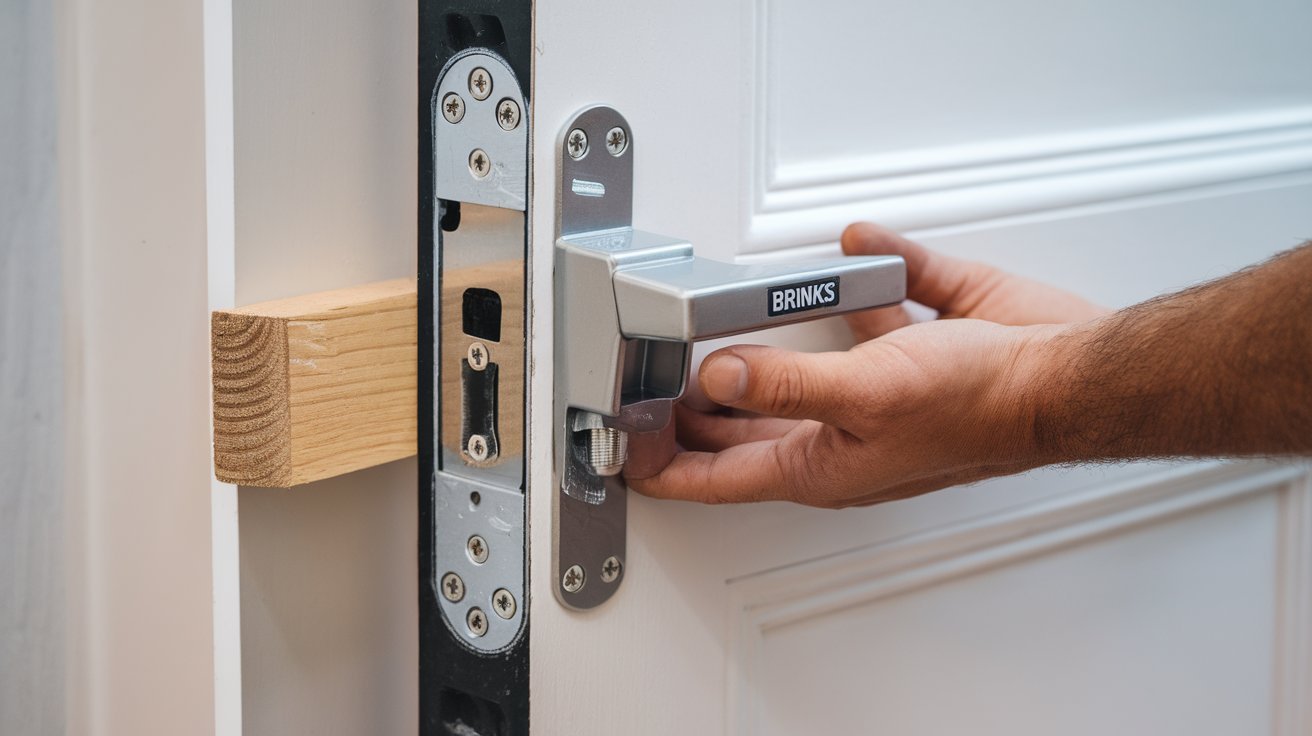
The Brinks Commercial Door Closer BC4031 is a heavy-duty, adjustable commercial door closer designed for high-traffic interior and exterior doors. Its combination of ANSI Grade 1 performance, adjustable Size 1–5 spring power, ADA compliance, 180-degree opening capability, and multiple mounting options makes it a versatile choice for commercial buildings and demanding door applications.
The BC4031 is designed to automatically close a door after opening while allowing installers to adjust important functions such as spring power, sweep speed, latching speed, and backcheck. Brinks specifies the model for left- or right-hinged interior doors up to 200 pounds and 54 inches wide, and exterior doors up to 200 pounds and 42 inches wide.
Whether it is being installed in an office, retail space, school, apartment building, warehouse, church, medical facility, or another commercial environment, understanding the BC4031’s specifications and adjustment options is essential for proper operation.
Brinks BC4031 Door Closer Specifications and Features
The BC4031 is Brinks Commercial’s aluminum-finish heavy-duty door closer. It has an all-metal body construction and is built for high-traffic commercial applications. The unit is adjustable from closer Size 1 through Size 5, allowing the installer to increase or decrease spring power according to the door and installation requirements.
Key specifications include:
- Model: BC4031
- Finish: Aluminum
- Closer rating: Adjustable Size 1–5
- Interior door capacity: Up to 200 lbs. and 54 inches wide
- Exterior door capacity: Up to 200 lbs. and 42 inches wide
- Handing: Left- or right-hinged doors
- Mounting: Standard, top jamb, or parallel arm
- Opening range: Up to 180 degrees
- Performance rating: ANSI Grade 1
- Fire rating: UL Listed, 3-hour fire rated
- Accessibility: ADA compliant
- Warranty: Limited 10-year warranty
- Product dimensions: Approximately 12.63 inches wide, 3.63 inches high, and 4.38 inches deep
- Product weight: Approximately 5.94 pounds
The adjustable spring power is one of the BC4031’s most important features. Instead of requiring a separate closer for every door size, the same closer can be configured for lighter or heavier applications within its rated range.
This flexibility can simplify replacement projects, especially when a building contains doors of different widths and weights.
What Doors Can the Brinks BC4031 Be Used On?
The Brinks BC4031 commercial door closer is intended for demanding interior and exterior applications, but the maximum recommended door size differs between the two.
For interior doors, Brinks rates the closer for doors up to 54 inches wide and 200 pounds. For exterior doors, the maximum rating is 42 inches wide and 200 pounds.
Exterior doors often experience additional resistance from wind, weather conditions, seals, and air pressure differences. For that reason, the same closer may require more spring power on an exterior door than on a similarly sized interior door.
The BC4031 includes an adjustable backcheck function, which helps create hydraulic resistance as the door approaches the fully open position. Brinks notes that backcheck can help prevent damage caused by wind on exterior-facing doors. However, backcheck is not intended to serve as a positive mechanical door stop.
Before selecting the closer, installers should consider the complete door assembly, including door width, weight, hinges, frame construction, weatherstripping, seals, wind exposure, and traffic level.
A closer that is technically rated for a door may still require careful adjustment to provide acceptable opening force and reliable closing performance.
BC4031 Standard, Top Jamb and Parallel Arm Installation
One of the biggest advantages of the Brinks BC4031 is its support for three common commercial mounting methods: standard arm, top jamb, and parallel arm installation.
Standard mounting is generally used when the closer body is installed on the door and the arm connects to the frame. This configuration is commonly used when the installation geometry allows the closer to be positioned on the appropriate side of the door.
Top jamb mounting places the closer body on the frame, with the arm connecting to the door. This can be useful when the door or frame configuration makes standard mounting unsuitable.
Parallel arm mounting positions the arm parallel to the door when it is closed, producing a cleaner appearance on the push side of many commercial doors. It requires correct arm positioning and preload during installation.
The official installation instructions provide different drilling locations and arm arrangements depending on the desired opening angle and mounting method. Installation dimensions are measured from the hinge centerline, and the instructions warn installers not to scale the drawings.
For proper operation, the forearm must be adjusted to the correct position. In regular-arm and top-jamb installations, the instructions specify positioning the forearm at approximately a 90-degree angle to ensure proper preload.
Using the wrong mounting pattern or incorrectly positioning the arm can cause difficult opening, poor closing, or problems adjusting the closer.
How to Adjust Brinks BC4031 Closing Speed and Latching Speed
After the mechanical installation is complete, the BC4031 must be adjusted so the door closes safely and consistently.
The closer includes separate hydraulic controls for closing or sweep speed and latching speed. Sweep speed controls much of the door’s movement as it closes from the open position, while latching speed controls the final portion of travel as the door moves into the closed and latched position.
The installation instructions state that turning the regulating valves clockwise slows door movement, while turning them counterclockwise increases the speed. Brinks cautions installers not to back the valves out of the closer, as doing so can cause leakage.
The instructions recommend adjusting the standard closing cycle to approximately 4 to 6 seconds from 90 degrees. Doors used by elderly people, people with disabilities, or small children may require longer closing times.
Adjustment should be made gradually. A practical approach is to turn a valve only a small amount, test the door, and then repeat as necessary.
If the door closes too quickly, it may slam, create excessive noise, or create a safety concern. If it closes too slowly, it may fail to latch consistently or allow unwanted air movement through the opening.
Brinks BC4031 Spring Power and Backcheck Adjustment
The adjustable Size 1–5 spring power allows the BC4031 to be matched more closely to the door. Higher spring settings provide more closing force, while lower settings reduce the force needed to operate the door.
According to Brinks support guidance, if the door is too difficult to push or pull open, installers using regular-arm or top-jamb mounting should first check that the forearm is positioned correctly. The support guidance recommends ensuring the forearm is at a 90-degree angle, reducing the spring power by backing out the “P” or power valve until it reaches its stop, and, where applicable, repositioning the forearm connection to reduce opening force.
The backcheck valve controls hydraulic resistance during the latter part of the opening cycle. Turning the adjustment in one direction increases resistance, while the opposite direction decreases it. The installation information specifically warns that the backcheck valve should never be closed completely and should not be treated as a substitute for a door stop.
Correct adjustment requires balancing several factors. The door needs enough closing force to overcome seals and latch reliably, but excessive spring power can make the door unnecessarily difficult to open.
Common Brinks BC4031 Problems and Troubleshooting Tips
If a newly installed Brinks BC4031 door closer does not operate correctly, the problem is often related to installation geometry or adjustment rather than a defective closer.
If the door is difficult to open, check the spring-power setting and arm position. Brinks recommends confirming the proper forearm angle and reducing the spring setting where appropriate.
If parallel-arm adjustments do not appear to work, Brinks advises reviewing the arm installation procedure. The pinion must be rotated and the main arm positioned correctly during installation; incorrect arm positioning can prevent normal closer operation.
Another important rule is to avoid over-adjusting valves. Hydraulic controls should not be unscrewed beyond their intended operating range because leakage can result.
Is the Brinks Commercial Door Closer BC4031 a Good Choice?
The Brinks Commercial Door Closer BC4031 is a strong option for applications requiring a heavy-duty, versatile, commercial-grade door closer. Its adjustable Size 1–5 power range, support for three mounting configurations, ANSI Grade 1 rating, ADA compliance, and UL-listed 3-hour fire rating give it a broad range of potential uses.
The closer is particularly suitable for high-traffic interior doors up to 54 inches wide and exterior doors up to 42 inches wide, provided the complete door system falls within the manufacturer’s specifications.
Its adjustable closing speed, latching speed, spring power, and backcheck allow installers to fine-tune operation for the specific application. The availability of standard, top-jamb, and parallel-arm mounting also makes it useful for both replacement work and new commercial installations.


 Celebrity2 months ago
Edith Sarfati: A Closer Look at Her Life, Career, Family, and Lasting Legacy
- Lifestyle2 months ago
Daily Living Tools That Make Life Easier for Seniors
- Business2 months ago
TravelTweaks Offers 2026 | Complete Guide to Travel Deals, Discounts & Smart Travel Planning
- Blog2 months ago
RTI Scheduler: The Complete Guide to Flexible Student Scheduling in Modern Schools
- Business2 months ago
Latest News MyGreenBucksNet (2026): Complete Guide to Platform Updates, Features, Earnings, and User Experience
- Technology2 months ago
AICOT: Transforming the Future of Artificial Intelligence and Connected Technology
- Tech2 months ago
How to Use 1.5f8-p1uzt in 2026: A Complete Guide to Understanding and Working with This Identifier
- Business2 months ago
TTweakFlight Discount Codes by TravelTweaks (2026): The Complete Guide to Saving More on Flights