
Blog
How Long Is 4 Inches? A Complete Measurement Guide for 2026

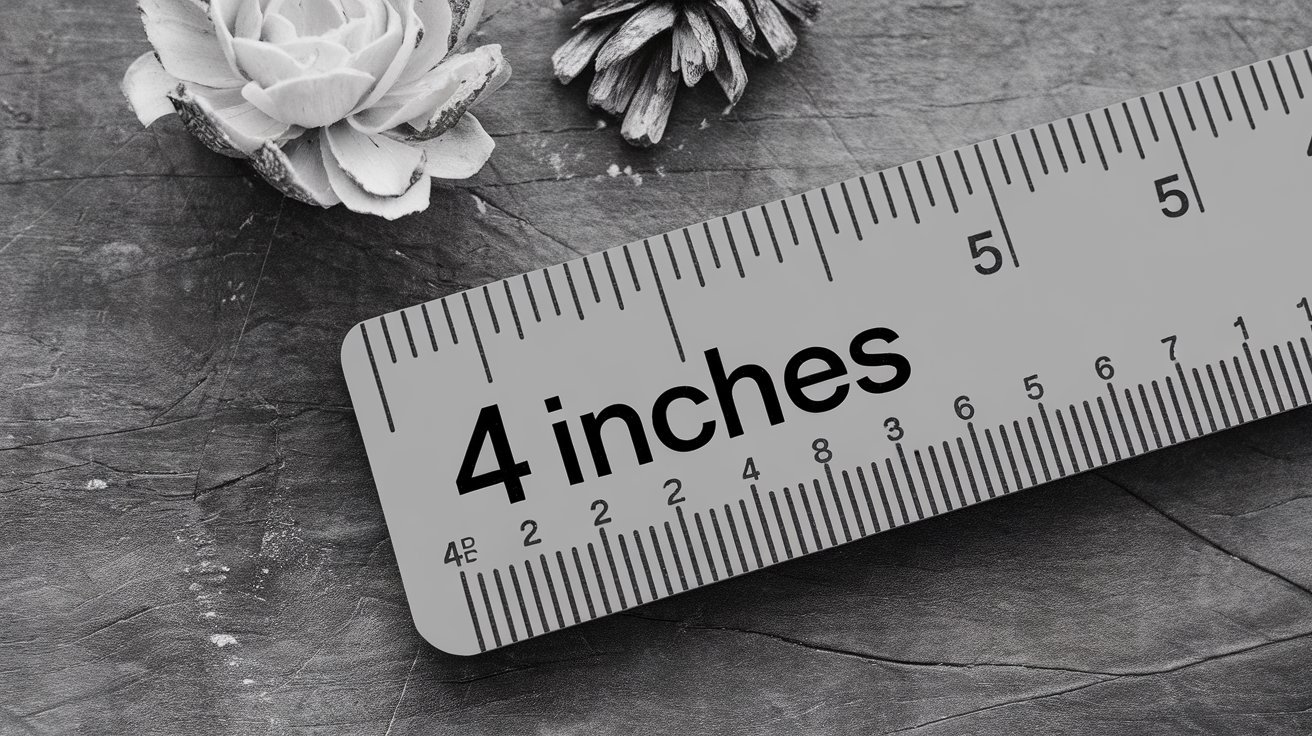
Understanding everyday measurements becomes much easier when we can connect numbers with familiar objects. One common question is “How long is 4 inches?” Although four inches is a relatively small measurement, it can be surprisingly difficult to visualize without a ruler or measuring tape.
Four inches equals 10.16 centimeters, 101.6 millimeters, or approximately 0.333 feet. In practical terms, 4 inches is about the length of a small smartphone section, a standard sticky-note side, or several common household objects. However, exact comparisons depend on the object being measured.
Whether we are checking the size of an item, estimating dimensions without a ruler, comparing measurements, or converting inches to other units, understanding 4 inches gives us a useful reference point.
How Long Is 4 Inches Exactly?
Four inches is a precise unit of length in the U.S. customary and imperial measurement systems. One inch contains 2.54 centimeters exactly. Therefore:
4 inches × 2.54 = 10.16 centimeters
This means:
- 4 inches = 10.16 centimeters
- 4 inches = 101.6 millimeters
- 4 inches = 0.3333 feet
- 4 inches = 0.1111 yards
- 4 inches = approximately 0.1016 meters
When we use a standard ruler, 4 inches reaches the fourth numbered inch mark. If the ruler also shows smaller divisions, the measurement extends exactly to the line representing four inches.
The metric equivalent, 10.16 cm, is particularly useful because centimeters are commonly used for everyday measurements in many countries. For example, if a product specification says an object is 4 inches long, we can immediately understand that it is slightly longer than 10 centimeters.
What Does 4 Inches Look Like in Real Life?
Numbers are often easier to understand when we compare them with familiar objects. Although these comparisons are only approximate unless the object has standardized dimensions, they help us visualize the size.
A 4-inch length is roughly 10 centimeters, making it relatively short. We can imagine a straight line extending about the width of a small hand or slightly longer than the short side of many small notes and cards.
Some everyday references that can help us visualize 4 inches include:
- About the length of a small adult hand section, depending on the person.
- Roughly the width of some small index cards or notes.
- Around the length of a short ruler segment from the zero mark to four inches.
- Approximately the length of a small kitchen utensil handle section.
- Similar to the length of some compact household objects.
We should remember that objects vary significantly. A smartphone, bank card, pencil, or hand can provide a general visual reference, but none should automatically be treated as an exact 4-inch measurement.
The most reliable way to confirm the length is always to use a ruler, measuring tape, or another calibrated measuring device.
How Long Is 4 Inches in Centimeters and Other Units?
Converting 4 inches into different measurement systems is straightforward. Since 1 inch equals exactly 2.54 centimeters, four inches equals 10.16 centimeters.
Here is a quick conversion guide:
| Measurement | Equivalent of 4 Inches |
|---|---|
| Inches | 4 in |
| Centimeters | 10.16 cm |
| Millimeters | 101.6 mm |
| Meters | 0.1016 m |
| Feet | 0.3333 ft |
| Yards | 0.1111 yd |
The centimeter conversion is probably the most useful for everyday purposes. If someone asks us how long 4 inches is and we are more familiar with the metric system, saying “4 inches is 10.16 centimeters” provides a precise answer.
For quick estimation, we can also say that 4 inches is a little over 10 centimeters. That approximation is useful when extreme precision is not required.
How to Measure 4 Inches Without a Ruler
Sometimes we need to estimate 4 inches when a ruler is not available. While an informal comparison cannot guarantee accuracy, several methods can provide a reasonable approximation.
One approach is to use a standard bank card or payment card as a reference. A typical bank card is approximately 3.375 inches long, so 4 inches is somewhat longer than the long edge of such a card. This can help us understand that 4 inches is not quite the length of a typical bank card.
Another approach is to use a familiar object with a known dimension. For example, if we know the approximate dimensions of an object, we can compare it visually with the target length.
We can also use our hand or fingers as a rough reference, but this method varies from person to person. Finger width, palm size, and hand length are not standardized, so hand-based measurements should be considered estimates rather than precise measurements.
For accurate work involving crafting, construction, sewing, manufacturing, cooking equipment, or product dimensions, we should always use a proper measuring instrument.
How Big Is 4 Inches Compared With Common Measurements?
Four inches may seem difficult to visualize because we encounter larger measurements frequently. Comparing it with other common lengths makes its scale clearer.
For example, 4 inches is one-third of a foot. Since a foot contains 12 inches, four inches represents exactly one-third of that distance:
4 ÷ 12 = 0.3333 feet
Four inches is also one-quarter of 16 inches, and it represents approximately 33% of a foot.
In metric terms, 4 inches is 10.16 centimeters, so it is just above the 10-centimeter mark. If we imagine a metric ruler, the measurement ends slightly past 10 cm.
This comparison also explains why 4 inches is considered a relatively small length. It is substantially shorter than common objects such as full-sized rulers, sheets of paper, and many books, but it is long enough to represent a noticeable dimension for small objects.
For example, an object measuring 4 inches wide would have a width of just over 10 cm, while something measuring 4 inches tall would have a height of just over 10 cm.
Why Knowing 4 Inches Is Useful
Understanding the size of 4 inches can be useful in many everyday situations. We may encounter this measurement when shopping online, reading product specifications, following craft instructions, checking furniture dimensions, measuring decorations, or comparing the size of electronic accessories.
For online shopping, understanding measurements is especially important because product photographs can sometimes make objects appear larger or smaller than they actually are. If a product description says something is 4 inches long, converting it to 10.16 cm gives us a more familiar reference.
The measurement can also matter in DIY projects and crafts. Cutting material to four inches requires greater precision than simply estimating the distance visually. In these situations, a ruler or measuring tape should be used.
In cooking and food preparation, measurements can sometimes appear in inches when describing equipment, containers, or food dimensions. Again, knowing that four inches is approximately 10 centimeters allows us to visualize the size quickly.
Final Answer: How Long Is 4 Inches?
So, how long is 4 inches? Four inches is exactly 10.16 centimeters, or 101.6 millimeters. It equals approximately one-third of a foot and is a little longer than 10 centimeters.
For visualization, we can think of 4 inches as a small but noticeable everyday length, roughly comparable to the length of several compact household objects. However, familiar-object comparisons are only estimates, so a ruler remains the best choice when precision matters.
The most important conversion to remember is simple:
4 inches = 10.16 cm
Once we know that conversion, it becomes much easier to understand product dimensions, craft measurements, everyday objects, and other situations where 4 inches appears.
Frequently Asked Questions About 4 Inches
Is 4 inches exactly 10 centimeters?
No. 4 inches equals exactly 10.16 centimeters. It can be rounded to approximately 10 centimeters for general estimation.
How many millimeters are in 4 inches?
There are 101.6 millimeters in 4 inches because one inch equals 25.4 millimeters.
Is 4 inches one-third of a foot?
Yes. A foot contains 12 inches, and 4 inches is exactly one-third of 12 inches.
How can we measure 4 inches without a ruler?
We can make a rough estimate by comparing the distance with familiar objects, but these methods are not precise. For an accurate 4-inch measurement, we should use a ruler or measuring tape.
How many centimeters is 4 inches?
4 inches = 10.16 centimeters. This is the most useful metric conversion for everyday situations.
Is 4 inches considered long or short?
Four inches is generally considered a short length, equal to just over 10 centimeters. Its practical significance depends on the object being measured and the context.

Pythagora is a search term commonly associated with Pythagoras, the ancient Greek philosopher and mathematician whose name is closely connected to one of the most important principles in geometry: the Pythagorean theorem. His intellectual tradition explored the relationships between numbers, shapes, music, philosophy, and the natural world. More than two thousand years later, Pythagoras remains an influential figure in mathematics education and the history of Western philosophy.
Whether we are searching for Pythagora to understand the famous theorem, learn about the philosopher’s life, or discover the relationship between mathematics and music, his legacy offers a fascinating starting point. The Pythagorean theorem is still used in schools, architecture, engineering, construction, navigation, and computer graphics, while Pythagorean philosophy continues to attract historical and academic interest.
1. Who Was Pythagora? Understanding Pythagoras
Pythagoras was an ancient Greek philosopher who lived approximately from 570 to 490 BCE. He was born on the island of Samos, near the coast of present-day Turkey, and later established an influential community of followers at Croton in southern Italy.
Although he is frequently described as a mathematician, Pythagoras was also associated with religious teachings, ethical principles, philosophical speculation, and ideas about the organization of the universe. His followers formed a community that combined intellectual study with particular rules of conduct and spiritual beliefs.
Much of what we know about Pythagoras comes from accounts written long after his lifetime. He left no surviving writings that can confidently be identified as his own, and later traditions often attributed discoveries to him that may have originated with his followers or earlier civilizations.
According to the Stanford Encyclopedia of Philosophy, distinguishing the historical Pythagoras from the legends that developed around him is a significant challenge for researchers. <Cite refs={[“turn519652search2″,”turn519652search12”]}/>
Nevertheless, the Pythagorean school played an important role in the development of ancient Greek thought. Its emphasis on numerical relationships helped encourage the view that mathematics could reveal patterns underlying the physical world.
2. What Is the Pythagorean Theorem?
The Pythagorean theorem is the mathematical principle most closely associated with Pythagoras. It describes the relationship between the three sides of a right-angled triangle.
The theorem states that the square of the hypotenuse is equal to the sum of the squares of the other two sides. The hypotenuse is the side opposite the right angle and is always the longest side of a nondegenerate right triangle.
The formula is:
Here:
- a represents the length of one shorter side.
- b represents the length of the other shorter side.
- c represents the hypotenuse.
To understand the formula, consider a right triangle with shorter sides measuring 3 units and 4 units.
Therefore, the hypotenuse measures 5 units.
This familiar 3-4-5 triangle is an example of a Pythagorean triple, a set of three positive whole numbers that satisfies the theorem. Other examples include 5-12-13 and 8-15-17.
The theorem applies specifically to right-angled triangles. It cannot be used in the same form for every triangle without additional information or a different mathematical relationship.
3. The History and Origins of Pythagorean Mathematics
The historical origins of the Pythagorean theorem are more complex than its traditional name suggests. Ancient civilizations, including the Babylonians, possessed substantial knowledge of numerical relationships involving right triangles before Pythagoras lived.
For example, Babylonian mathematical records demonstrate familiarity with numerical triples corresponding to right-angled triangles. Egyptian mathematical practices also included practical geometric knowledge relevant to measurement and construction.
Pythagoras and his followers are traditionally associated with developing mathematical relationships into a more systematic form of intellectual investigation. However, historians cannot establish with certainty that Pythagoras personally discovered or proved the theorem.
The broader Pythagorean school helped connect arithmetic with geometry and encouraged the study of mathematical principles for their own sake rather than solely for practical applications.
This development was important because mathematical reasoning increasingly became a subject of theoretical investigation. Instead of simply measuring land or calculating building dimensions, thinkers explored why geometric relationships were true and how they could be demonstrated through logical argument.
The theorem’s enduring importance comes not only from its historical association with Pythagoras but also from its simplicity, reliability, and wide range of applications.
4. Pythagorean Philosophy: Numbers, Nature, and the Universe
Pythagorean philosophy extended beyond geometric calculations. Members of the tradition believed that numerical relationships could help explain the structure and order of reality.
The famous expression “all things are numbers” summarizes a central theme associated with Pythagorean thought. Numbers were understood not merely as tools for counting but as principles that could reveal patterns in music, geometry, astronomy, and nature.
Pythagorean thinkers explored numerical relationships in geometric figures and studied proportions that appeared in different areas of experience. Their approach encouraged the search for underlying mathematical order.
They also developed distinctive religious and ethical beliefs. Ancient sources associate the Pythagorean community with disciplined living, communal practices, and the doctrine of transmigration, the belief that the soul passes from one form of life to another.
These ideas influenced later philosophical traditions, particularly through the intellectual environment in which Plato and other Greek thinkers worked. However, individual doctrines must be distinguished carefully because the Pythagorean school evolved over time and did not necessarily preserve a single, unchanged system of beliefs.
The historical significance of Pythagorean philosophy lies in its attempt to connect rational inquiry, ethical conduct, and an ordered understanding of the universe. <Cite refs={[“turn519652search2″,”turn519652search0”]}/>
5. Pythagoras and the Mathematical Relationship Between Music and Numbers
One of the most interesting aspects of Pythagorean tradition is its connection between mathematics and music. Pythagorean thinkers investigated how numerical ratios could correspond to pleasing musical intervals.
In traditional demonstrations involving vibrating strings, changing a string’s effective length while keeping other conditions constant can change the pitch it produces. Under suitable conditions, simple ratios between string lengths correspond to familiar musical intervals.
For example, a string vibrating at twice the frequency of another produces a pitch one octave higher. A frequency ratio of 3:2 corresponds to a perfect fifth, while a ratio of 4:3 corresponds to a perfect fourth.
These relationships illustrate how mathematics can describe aspects of sound and musical structure.
Pythagorean accounts also connected musical harmony with broader ideas about cosmic order. The notion that the universe might exhibit mathematical harmony became an influential theme in ancient philosophy.
Although modern acoustics explains sound through physical principles that go beyond early Pythagorean theories, the relationship between frequency, proportion, and musical intervals remains a clear example of mathematics applied to the natural world.
6. Real-Life Applications of the Pythagorean Theorem
The Pythagorean theorem remains useful because it allows us to calculate an unknown side of a right triangle when the other two sides are known.
Architecture and construction: Builders can use the theorem to check right angles, calculate diagonal measurements, and plan structural layouts. A 3-4-5 triangle, for example, provides a practical method for establishing a right angle when measuring a building site.
Engineering: Engineers use right-triangle relationships in structural calculations, mechanical designs, and spatial measurements. More advanced engineering applications may combine the theorem with other mathematical tools.
Navigation and distance: In a simplified coordinate system, the theorem can calculate the straight-line distance between two points when their horizontal and vertical separation is known.
Computer graphics: The distance between points on a two-dimensional screen can be calculated using the same mathematical relationship. In three-dimensional applications, the principle can be extended to include a third coordinate.
Education: Students use the theorem to develop algebraic skills, understand geometric relationships, and practice solving problems step by step.
Consider a ladder placed 6 meters from a wall, with its top reaching 8 meters above the ground. If the ladder, wall, and ground form a right triangle, the ladder’s length is:
The ladder is therefore 10 meters long, assuming the measurements describe the same right triangle.
This practical example shows how a mathematical relationship associated with ancient Greek thought continues to help solve modern measurement problems.
7. Why Pythagora Remains Relevant in 2026
In 2026, interest in Pythagora continues through mathematics education, historical research, philosophy, and digital learning resources. The subject connects a famous ancient thinker with a mathematical principle that students encounter around the world.
Learning about Pythagoras helps us understand the historical development of mathematical reasoning, while practicing the Pythagorean theorem strengthens problem-solving skills. Exploring Pythagorean philosophy also provides insight into how ancient thinkers attempted to explain the relationships between numbers, nature, music, and the universe.
It is important, however, to distinguish established mathematical facts from historical traditions. The Pythagorean theorem is a proven geometric relationship, while claims about exactly which discoveries Pythagoras made personally remain subject to historical debate.
This distinction makes the topic particularly valuable: it combines mathematical certainty with an opportunity to examine how knowledge develops, spreads, and becomes associated with influential individuals.
Conclusion
Pythagora, commonly referring to Pythagoras, represents an important connection between ancient philosophy and mathematics. His name is permanently associated with the Pythagorean theorem, which explains how the sides of a right-angled triangle relate to one another.
Beyond geometry, the Pythagorean tradition explored number theory, musical harmony, ethical conduct, and the mathematical organization of the universe. Its influence contributed to the development of Greek intellectual traditions and helped shape later discussions of mathematics and philosophy.
By studying Pythagoras and the ideas associated with his school, we can appreciate both the historical roots of mathematical thought and the practical value of mathematical reasoning today. From measuring a ladder to calculating distances in digital environments, the theorem remains a powerful example of how a simple relationship can have applications across many areas of modern life.

The Volkswagen ID. Buzz brings the spirit of the classic Volkswagen Microbus into the modern era with an all-electric powertrain, distinctive retro-inspired styling, and a spacious interior designed for families, road trips, and everyday transportation. Combining recognizable design elements with contemporary electric vehicle technology, the ID. Buzz offers an alternative to conventional SUVs and minivans for drivers who want practicality with personality.
Inspired by Volkswagen’s historic Type 2 Bus, the ID. Buzz preserves the original vehicle’s friendly appearance while introducing modern safety systems, digital displays, electric driving capability, and flexible passenger seating. Its short overhangs, upright profile, large windows, and two-tone paint options create a distinctive appearance that stands out among today’s electric vehicles.
For 2026, the Volkswagen ID. Buzz remains an appealing choice for buyers interested in an electric family vehicle with generous passenger space and useful cargo capacity. However, shoppers should consider range, charging availability, purchase price, and vehicle size before deciding whether it suits their lifestyle.
Whether we are comparing electric vans, researching the latest Volkswagen models, or considering an alternative to a traditional minivan, understanding the 2026 ID. Buzz’s features, performance, interior, and ownership costs helps us make a more informed decision.
2026 Volkswagen ID. Buzz Performance, Power, and Driving Experience
The Volkswagen ID. Buzz uses an all-electric drivetrain, replacing the gasoline engine and conventional transmission of the original Microbus with electric motors and a rechargeable battery. This configuration delivers smooth acceleration, quiet operation, and immediate torque, making the vehicle particularly suitable for urban driving and family transportation.
Power output depends on the model, battery configuration, and market. In European specifications, rear-wheel-drive versions can produce approximately 286 PS, while the dual-motor GTX version produces up to 340 PS. The GTX configuration adds all-wheel drive for improved traction and stronger acceleration. These figures should not be confused with North American specifications, which can differ by model year and trim.
The electric motor provides smooth power delivery without the gear changes associated with conventional gasoline vehicles. This makes the ID. Buzz comfortable in stop-and-go traffic, while its low-mounted battery helps lower the center of gravity.
The driving experience is also influenced by the vehicle’s size. Its upright design provides good outward visibility, but the relatively large body requires attention when parking or maneuvering through narrow streets. Drivers accustomed to smaller cars may need time to become comfortable with its dimensions.
For families, the combination of quiet operation, relaxed acceleration, and a spacious cabin makes the ID. Buzz an appealing alternative to traditional passenger vans.
Battery Range and Charging the Volkswagen ID. Buzz
Electric range is one of the most important considerations when choosing the ID. Buzz. Volkswagen offers different battery and body configurations across international markets, so the advertised range depends on the exact model.
For example, Volkswagen Commercial Vehicles lists a net battery capacity of approximately 79 kWh for certain versions and 86 kWh for selected long-wheelbase configurations. Depending on the version, official European WLTP range figures can reach approximately 293 miles or more. These figures are not directly comparable with EPA estimates used in the United States because the testing procedures differ.
Real-world driving range can be lower than the official rating. Cold weather, highway speeds, passenger loads, climate-control use, road gradients, and driving style all affect energy consumption.
Charging options generally include home charging and public charging stations.
Home charging: A compatible wallbox can provide convenient overnight charging, making daily use easier for drivers with access to private parking.
Public AC charging: Destination chargers can replenish the battery while the vehicle is parked at workplaces, shopping centers, or hotels.
DC fast charging: Compatible rapid chargers can restore a substantial portion of the battery during longer journeys. Actual charging speed depends on the vehicle, charger output, battery temperature, and current state of charge.
Before purchasing an ID. Buzz, we should evaluate the availability of chargers along our regular routes. Drivers who can charge at home generally have a simpler ownership experience than those who depend entirely on public charging.
Interior Space, Seating, and Cargo Capacity
The ID. Buzz is designed around a spacious, open cabin rather than the low seating position of a traditional sedan. Its tall roof and upright sides provide generous headroom and contribute to an airy interior.
Depending on the market, wheelbase, and seating configuration, the vehicle is available with five, six, or seven seats. The longer-wheelbase versions offer additional flexibility for families who need more passenger capacity.
The cabin emphasizes practical storage and modern technology. Features available on selected configurations include a digital instrument display, a central infotainment touchscreen, smartphone connectivity, multiple climate-control zones, and convenient storage compartments.
The upright windshield and large windows help create an open feeling for both the driver and passengers. Sliding side doors also make it easier to enter and exit in crowded parking spaces where conventional doors may be difficult to open fully.
Cargo capacity depends on how the seats are arranged. With the rear seats folded or removed where the configuration permits, the ID. Buzz can accommodate luggage, camping equipment, sports gear, and other bulky items.
The longer version is particularly attractive for people who regularly travel with several passengers and their belongings. However, shoppers should test the third-row seating and inspect the cargo area in person, because a vehicle’s maximum cargo figure does not necessarily represent the space available when all seats are occupied.
Volkswagen ID. Buzz Price, Trims, and Available Features
The price of the Volkswagen ID. Buzz varies significantly by country. Taxes, import duties, incentives, equipment, and local distribution arrangements can all influence the final cost.
In the United States, Volkswagen’s published ID. Buzz information for the 2025 model year listed the Pro S at a starting MSRP of $59,995 before destination charges, with higher prices for additional equipment and all-wheel-drive versions. That historical figure should not be treated as a confirmed 2026 U.S. price. Buyers should check the current model-year availability and official configurator before making a purchase decision.
Across markets, buyers may encounter different versions, including passenger-oriented trims, sportier GTX models, and commercial ID. Buzz Cargo variants.
| Configuration | Main advantage |
|---|---|
| Passenger ID. Buzz | Family transportation and flexible seating |
| Long-wheelbase version | Additional interior and cargo flexibility |
| GTX version | Higher performance and dual-motor all-wheel drive in applicable markets |
| ID. Buzz Cargo | Electric commercial transportation and load-carrying practicality |
Available equipment varies, but selected versions offer premium audio systems, panoramic roof options, power-operated doors, advanced parking assistance, and upgraded seating.
When comparing prices, we should consider the complete ownership cost rather than the advertised starting price alone. Insurance, charging equipment, electricity rates, tires, servicing, financing, and depreciation can all influence the long-term expense.
Safety, Reliability, and Everyday Ownership
The Volkswagen ID. Buzz incorporates modern driver-assistance and safety technologies, with availability depending on the market and trim. Depending on configuration, these may include automatic emergency braking, adaptive cruise control, lane assistance, parking sensors, and camera-based parking systems.
These features can make a large vehicle easier to manage, particularly in traffic and confined parking areas. Nevertheless, driver-assistance systems support rather than replace attentive driving.
As with any electric vehicle, battery health, charging performance, software updates, and service support are important ownership considerations. Prospective buyers should review the applicable battery warranty, general vehicle warranty, roadside assistance coverage, and local dealer support.
The ID. Buzz’s electric powertrain eliminates routine engine-oil changes and many maintenance tasks associated with combustion engines. However, owners still need to maintain tires, brakes, suspension components, cabin filters, and other systems.
Reliability over the long term depends on the individual vehicle, maintenance history, software, and operating conditions. Because the modern ID. Buzz is a relatively recent model, long-term ownership evidence is more limited than it is for some established gasoline-powered vans.
For buyers considering a used ID. Buzz, checking the service history, remaining battery warranty, charging equipment, software status, and accident history is especially important.
Is the Volkswagen ID. Buzz Worth Buying in 2026?
The Volkswagen ID. Buzz is a distinctive electric vehicle that combines retro-inspired styling with modern technology and practical passenger space. It is especially appealing to families, electric-vehicle enthusiasts, and drivers who want something different from a conventional SUV.
Its strongest advantages include its recognizable design, spacious interior, smooth electric performance, flexible seating options, and potential convenience when home charging is available. The commercial Cargo version also offers an alternative for businesses looking to electrify suitable delivery and transportation operations.
However, the ID. Buzz is not the right vehicle for every driver. Its purchase price may be higher than that of conventional family vehicles, its real-world range can vary considerably, and its tall body is less aerodynamic than some electric SUVs. Drivers who frequently undertake long journeys in areas with limited charging infrastructure should plan their routes carefully.
Before buying, we should compare the ID. Buzz with electric SUVs, other electric vans, and conventional minivans based on seating, luggage space, range, charging access, and total cost of ownership.
Final verdict
The Volkswagen ID. Buzz offers a compelling combination of iconic styling, modern electric technology, and family-friendly versatility. For buyers who value space, distinctive design, and electric driving, it deserves serious consideration in 2026. The best choice depends on the available model in our market, the range we realistically need, and whether the vehicle’s price and charging requirements fit our lifestyle.

Fascisterne is a Danish word that translates most directly into English as “the fascists.” It is the definite plural form of fascist and refers to people associated with, supporting, or belonging to fascist movements. The word itself does not identify one particular political party or organization; its exact meaning depends on the historical or political context in which it appears.
For English-speaking readers, fascisterne can look like an unfamiliar political term. Understanding its Danish grammar, historical origins, connection with European fascism, and particular relevance to Denmark makes the meaning much clearer.
What Does Fascisterne Mean in English?
The simplest translation of fascisterne is “the fascists.” It describes people rather than the ideology itself.
The distinction becomes clearer when the related Danish words are separated:
- Fascist — a fascist
- Fascisten — the fascist
- Fascister — fascists
- Fascisterne — the fascists
- Fascisme — fascism
The ending “-erne” is important because Danish uses it to form the definite plural. Consequently, fascisterne does not represent a separate ideology, organization, or party name. It is a grammatical form referring to a defined group of fascists.
The precise group being discussed must therefore be determined from the surrounding text. A Danish historical source discussing Mussolini may use fascisterne for Italian Fascists, while a text about Denmark during the Second World War may use it when discussing Danish fascist or Nazi organizations.
This is why simply translating the word without reading the surrounding material can sometimes produce an incomplete understanding.
Where Did Fascism Come From?
The history behind fascisterne begins with the development of modern fascism in Italy after the First World War. The period was characterized by political instability, social conflict, economic difficulties, and intense debates about the future direction of European societies.
Benito Mussolini became the central figure in the development of Italian Fascism. His movement emphasized powerful centralized leadership, nationalism, political discipline, and opposition to liberal parliamentary politics. Mussolini came to power in Italy in 1922, after which the country’s political system increasingly developed into dictatorship.
The terminology surrounding fascism has an older linguistic history. The word is ultimately connected with the Latin fasces, a bundle of rods associated with authority in ancient Rome. The imagery was adopted by Italian Fascists and became closely associated with the movement.
As fascism developed and related authoritarian movements appeared elsewhere in Europe, words derived from fascism entered many European languages. Danish adopted fascisme for the ideology and fascist for a person associated with it, producing the definite plural fascisterne.
What Are the Main Characteristics Associated With Historical Fascism?
There was no single identical fascist movement across every European country. Historical movements differed in organization, racial ideology, economic policy, religious attitudes, and relationships with existing institutions.
Nevertheless, historians commonly identify several recurring characteristics in historical fascist movements, including authoritarian leadership, intense nationalism, rejection of liberal democracy, political repression, mass mobilization, propaganda, and the prioritization of collective national identity over individual political rights.
Fascist movements often presented themselves as alternatives to established parliamentary systems. They emphasized national unity and strong leadership while portraying political opponents as threats to national stability.
Nazism developed in Germany within this wider history of authoritarian and fascist politics, but Nazi ideology also had distinctive features, particularly its central emphasis on racial hierarchy, antisemitism, and biological racism. Therefore, the terms “fascist” and “Nazi” should not automatically be treated as perfect synonyms.
This distinction is particularly important when discussing Danish history, where the principal Danish organization associated with Nazism was specifically a National Socialist party.
Fascisterne and Fascism in Denmark
Denmark had its own fascist and Nazi movements during the 1930s and the Second World War, although none developed into a government comparable to Mussolini’s Italy or Hitler’s Germany.
The most important Danish Nazi organization was Danmarks Nationalsocialistiske Arbejderparti (DNSAP), or the Danish National Socialist Workers’ Party. It was founded in 1930 and was initially led by Cay Lembcke. Frits Clausen became the party’s principal leader in 1933.
DNSAP was strongly influenced by the German Nazi movement. Its organization, political language, symbols, nationalism, antisemitism, and opposition to parliamentary democracy reflected substantial influence from Adolf Hitler’s NSDAP.
Despite its organization and publicity, DNSAP remained a politically marginal movement in Denmark. At the 1939 parliamentary election, it received approximately 1.8% of the vote and won three seats. In the 1943 election, it received approximately 2.1% and again won three seats.
These results are important when interpreting references to fascisterne in Danish history. Denmark had organized fascist and Nazi supporters, but those movements did not achieve majority electoral support or take control of the Danish government through elections.
Fascisterne During the German Occupation
Germany occupied Denmark from 1940 to 1945, creating a significantly different political environment for Danish Nazi and fascist organizations.
During the occupation, Danish Nazi activists and other collaborators interacted with German authorities in different ways. Some Danish volunteers also joined German military formations, while Danish resistance movements developed in opposition to German occupation and collaboration.
The history of this period is therefore more complicated than simply dividing everyone into two groups. Danish society contained collaborators, resistance members, political organizations, government officials, civilians, and people whose behavior changed as the occupation developed.
DNSAP hoped the German occupation would create greater opportunities for the party, but it did not transform the organization into a dominant political force. Its electoral performance remained limited even during wartime.
Understanding this historical context is essential when encountering fascisterne in Danish material about the Second World War.
Fascisterne vs. Fascisme: Why the Difference Matters
One of the easiest mistakes for English-speaking readers is confusing fascisterne with fascisme.
The two words are closely related but describe different things.
Fascisme refers to fascism as a political ideology, movement, or historical system. Fascisterne, on the other hand, identifies people described as fascists.
For example, a historical article might discuss fascisme when explaining political beliefs and institutions, but refer to fascisterne when describing the people who belonged to or supported a particular movement.
This distinction is especially useful when translating Danish books, newspapers, historical documents, or political commentary. The word fascisterne alone does not tell the reader whether the people being discussed were Italian Fascists, Danish fascists, German Nazis, or another group that the author has identified as fascist. The surrounding context provides that information.
How Is Fascisterne Used Today?
In 2026, the word fascisterne can still appear in Danish historical writing, political commentary, journalism, books, and online discussions.
Its use can be precise or rhetorical. In historical writing, it may identify people associated with a documented fascist movement. In contemporary political arguments, however, terms such as “fascist” can sometimes be used more broadly as criticism or political rhetoric.
That makes context particularly important.
When encountering the word, readers should ask several questions: Who is being described? Which organization or movement is involved? What period is being discussed? Is the writer making a historical classification, quoting somebody else’s accusation, or using the word rhetorically?
These questions help separate a documented historical description from a modern political characterization.
Why Understanding Fascisterne Still Matters
The word fascisterne is more than a translation exercise. It provides an entry point into an important period of European history involving dictatorship, nationalism, political violence, propaganda, war, occupation, and resistance.
For Denmark, the term is particularly relevant to understanding the country’s 1930s political movements, DNSAP, German occupation, collaboration, and resistance during the Second World War.
At the same time, precise terminology matters. Fascism, Nazism, Italian Fascism, Danish Nazism, and other authoritarian movements had connections but were not necessarily identical. Treating every movement as interchangeable can obscure important historical differences.
In modern discussions, the same principle applies. A political label is most informative when it is connected to identifiable beliefs, organizations, actions, and historical evidence.
Frequently Asked Questions About Fascisterne
What does fascisterne mean?
Fascisterne is Danish for “the fascists.”
Is fascisterne singular or plural?
It is plural and definite, referring to “the fascists.”
Is fascisterne the Danish word for fascism?
No. The Danish word for fascism is fascisme. Fascisterne refers to people.
Is fascisterne a political party?
No. By itself, it is an ordinary Danish noun and does not identify a specific political party.
Did Denmark have fascists and Nazis?
Yes. Denmark had several radical nationalist and Nazi-oriented organizations during the 1930s and Second World War. DNSAP was the best-known Danish Nazi party.
What does DNSAP stand for?
DNSAP stands for Danmarks Nationalsocialistiske Arbejderparti, the Danish National Socialist Workers’ Party.
Was DNSAP the same as every fascist movement?
No. DNSAP was specifically a Danish National Socialist organization strongly influenced by German Nazism. Historical fascist movements differed from one another, so precise terminology is important.
Why does fascisterne appear in Danish history?
The term appears because Denmark, like several other European countries, had fascist and Nazi movements during the interwar period and Second World War. It is also used more generally when Danish-language sources discuss fascists in other countries.
In short, Fascisterne means “the fascists,” and its exact reference depends on context. Understanding the Danish grammar behind the word, the origins of European fascism, and Denmark’s own experience with fascist and Nazi movements provides the historical background needed to interpret the term accurately in 2026.

Charlie Chaplin: Biography, Famous Movies, Career, and Lasting Legacy in 2026

Argentina National Football Team in 2026: History, Players, World Cup Results, and Legacy

Happy Death Day 2U: Plot, Cast, Ending Explained, and Movie Review (2026 Guide)


 Lifestyle3 months ago
Daily Living Tools That Make Life Easier for Seniors
- Celebrity3 months ago
Edith Sarfati: A Closer Look at Her Life, Career, Family, and Lasting Legacy
- Business3 months ago
TravelTweaks Offers 2026 | Complete Guide to Travel Deals, Discounts & Smart Travel Planning
- Blog3 months ago
RTI Scheduler: The Complete Guide to Flexible Student Scheduling in Modern Schools
- Business3 months ago
Latest News MyGreenBucksNet (2026): Complete Guide to Platform Updates, Features, Earnings, and User Experience
- Tech3 months ago
How to Use 1.5f8-p1uzt in 2026: A Complete Guide to Understanding and Working with This Identifier
- Tech3 months ago
www. #TurboGeek.org Guide 2026 | Technology News, Gaming, Software & Tech Resources
- Business3 months ago
TTweakFlight Discount Codes by TravelTweaks (2026): The Complete Guide to Saving More on Flights