Blog
QX60 2025: Complete Guide to the 2025 Infiniti QX60


The QX60 2025, officially known as the 2025 INFINITI QX60, is a three-row luxury SUV designed for families and drivers who want a combination of premium comfort, practical passenger space, modern technology, and confident road performance. For 2025, the QX60 continues to offer a refined alternative to mainstream three-row SUVs while competing with vehicles such as the Acura MDX, Lexus TX, Volvo XC90, and other premium family-oriented models.
The 2025 QX60 combines a 2.0-liter VC-Turbo four-cylinder engine, a nine-speed automatic transmission, available Intelligent All-Wheel Drive, and seating for up to seven people. Its focus is not extreme performance but rather smooth power delivery, comfortable transportation, upscale design, and everyday versatility.
For families looking beyond a conventional SUV, the QX60 offers a particularly attractive balance between luxury and practicality.
QX60 2025 Engine, Performance, and Fuel Economy
The 2025 Infiniti QX60 uses a 2.0-liter variable-compression turbocharged four-cylinder engine producing 268 horsepower and 286 lb-ft of torque. The engine is paired with a nine-speed automatic transmission, providing the power needed for everyday commuting, highway driving, and family trips.
The variable-compression technology is one of the QX60’s distinctive engineering features. The system can adjust the engine’s compression ratio according to driving conditions, allowing Infiniti to balance performance and efficiency. Turbocharging also provides substantial torque at relatively low engine speeds, helping the SUV feel responsive during acceleration.
Front-wheel drive is available, while Intelligent All-Wheel Drive can be selected for additional traction. AWD can be particularly useful for drivers who regularly encounter rain, snow, loose surfaces, or steep roads.
The QX60 is not designed as a high-performance sports SUV. Instead, we get a driving experience focused on comfort, refinement, and predictable handling. Its suspension is tuned to absorb everyday road imperfections, making the vehicle particularly suitable for family transportation and longer journeys.
Fuel economy varies according to drivetrain and configuration. Buyers should check the EPA rating for the exact model because wheel size, drivetrain, and trim can affect the final figures.
QX60 2025 Interior, Seating, and Cargo Space
One of the strongest reasons to consider the QX60 2025 is its three-row interior. The SUV can accommodate up to seven passengers, depending on configuration, making it useful for larger families and people who frequently transport additional passengers.
The cabin is designed with a premium atmosphere, incorporating quality materials, comfortable seating, and a layout intended to make long journeys more pleasant. Higher trims introduce additional luxury features, including upgraded upholstery, heated and ventilated seats, premium interior finishes, and enhanced cabin technology.
The second row provides useful flexibility, while the third row gives families additional seating when required. Access to the rear seats is also designed with family practicality in mind.
Cargo capacity is another important consideration. With all three rows in use, available cargo space is naturally more limited than in a two-row SUV. However, folding the third row significantly expands the luggage area. Folding additional rear seats provides still more room for groceries, luggage, sports equipment, and larger household items.
This flexibility makes the QX60 particularly suitable for families who need passenger capacity during the week but occasionally require substantial cargo space.
QX60 2025 Technology and Infotainment
The 2025 QX60 provides a modern collection of infotainment and convenience technologies. A large central touchscreen serves as the primary interface for navigation, entertainment, vehicle settings, and smartphone connectivity.
Depending on trim, the QX60 can include wireless Apple CarPlay and Android Auto, allowing compatible smartphones to connect with the vehicle’s infotainment system conveniently.
Higher trims provide additional premium technology, including upgraded audio systems and enhanced digital displays. Infiniti also offers various connected services designed to make vehicle ownership more convenient.
For families, technology extends beyond entertainment. Multiple charging options, rear-seat climate controls, available wireless charging, and additional USB connections can make longer journeys considerably easier.
The available Bose premium audio system is particularly appealing to buyers who prioritize sound quality. A premium audio system can transform the cabin into a more enjoyable environment for music, podcasts, and road-trip entertainment.
QX60 2025 Safety and Driver-Assistance Features
Safety is an important consideration in any three-row family SUV, and the 2025 QX60 offers numerous driver-assistance technologies.
Depending on configuration, the SUV can provide features such as forward collision warning, automatic emergency braking, lane departure warning, blind-spot monitoring, rear cross-traffic alert, adaptive cruise control, and lane intervention technologies.
The vehicle’s driver-assistance systems are designed to help increase awareness and reduce the workload during certain driving situations. However, these systems are intended as assistance features rather than replacements for an attentive driver.
Available camera and parking technologies can also make maneuvering the QX60 easier. This is particularly valuable because three-row SUVs have larger dimensions and can be more difficult to position in crowded parking areas.
For families, the combination of a strong safety structure and modern driver-assistance technology makes the QX60 a compelling option in the luxury midsize SUV segment.
QX60 2025 Exterior Design and Trim Levels
The QX60 has a distinctive luxury-SUV appearance, combining a large grille, sculpted bodywork, modern lighting, and a relatively elegant overall profile. The design avoids looking overly aggressive while still giving the SUV a substantial road presence.
The 2025 QX60 is offered in several trim levels, allowing buyers to choose between value-focused equipment and a more luxurious specification. Depending on the market, the lineup includes grades such as Pure, Luxe, Sensory, and Autograph.
The entry-level Pure provides the basic QX60 experience, while Luxe adds additional convenience and technology. Sensory moves further into premium territory, and Autograph represents one of the most luxurious configurations.
Higher trims can include features such as larger wheels, premium leather seating, upgraded interior materials, advanced audio, panoramic roof features, additional driver assistance, and enhanced comfort equipment.
This tiered lineup allows buyers to select the QX60 according to their budget rather than forcing every customer into the most expensive configuration.
QX60 2025 Towing, Practicality, and Everyday Use
Although the QX60 is primarily a family luxury SUV, it also offers useful towing capability. When properly equipped, the vehicle can tow up to approximately 6,000 pounds, depending on configuration and equipment.
That capability can make the QX60 suitable for towing certain recreational equipment, small boats, trailers, or other loads. Buyers should always verify the exact towing capacity of the specific vehicle and ensure that the required factory or approved equipment is installed.
For everyday use, the QX60’s greatest strengths are its versatile seating, comfortable ride, spacious cabin, premium environment, and available AWD.
It can handle school runs, commuting, shopping, airport trips, weekend travel, and long-distance road trips without feeling like a vehicle designed exclusively for one purpose.
The main compromises come from its size and luxury positioning. A three-row SUV can be harder to maneuver in tight urban spaces, while higher trims can become considerably more expensive.
Is the 2025 QX60 Worth Buying?
The 2025 INFINITI QX60 is worth considering for buyers who want a premium three-row SUV with a comfortable interior and useful family functionality. Its 268-hp turbocharged engine provides adequate performance, while the available AWD system increases versatility.
Its biggest advantage is the way it combines luxury and practicality. Some SUVs focus heavily on passenger capacity, while others prioritize luxury materials. The QX60 attempts to deliver both.
The interior is comfortable, the technology is extensive, and the available higher trims provide a genuinely upscale experience. Meanwhile, the three-row configuration gives families flexibility that many luxury two-row SUVs cannot match.
Drivers who prioritize maximum fuel efficiency or sporty handling may want to compare alternatives. Likewise, buyers who need an exceptionally spacious third row should test the vehicle personally before purchasing because rear-seat comfort is an important consideration in this category.
Overall, the QX60 2025 remains a strong choice for drivers seeking a comfortable, stylish, technologically equipped three-row luxury SUV.
Frequently Asked Questions About QX60 2025
How much horsepower does the 2025 QX60 have?
The 2025 QX60’s 2.0-liter VC-Turbo engine produces 268 horsepower and 286 lb-ft of torque.
How many people can the QX60 2025 seat?
The SUV can seat up to seven passengers, depending on the selected interior configuration.
Does the 2025 QX60 have all-wheel drive?
Yes. Intelligent All-Wheel Drive is available, while front-wheel drive is offered on applicable configurations.
What engine does the QX60 2025 use?
The 2025 QX60 uses a 2.0-liter variable-compression turbocharged four-cylinder engine connected to a nine-speed automatic transmission.
Is the QX60 good for families?
Yes. Its three rows, flexible cargo space, comfortable seats, safety technology, and available family-oriented features make it well suited to family use.
How much can the QX60 2025 tow?
A properly equipped QX60 can tow up to about 6,000 pounds, although exact capacity depends on configuration and equipment.
What are the main competitors of the QX60?
Important competitors include the Acura MDX, Lexus TX, Volvo XC90, Genesis GV80, and other premium three-row SUVs.
Final Verdict on the QX60 2025
The QX60 2025 delivers a balanced package for drivers who want a luxury SUV capable of handling everyday family responsibilities. Its turbocharged engine, available AWD, three-row seating, upscale interior, advanced technology, safety features, and towing capability give it broad appeal.
Its strongest quality is versatility. We can use it as a comfortable daily commuter, a family vehicle, a road-trip SUV, or a practical luxury vehicle for transporting passengers and cargo.
The QX60 is not necessarily the most athletic or fuel-efficient SUV in its class, but it succeeds by emphasizing comfort, refinement, convenience, and premium design. For buyers who want three-row capability without abandoning luxury, the 2025 INFINITI QX60 deserves a place on the shortlist.

The Woodure toddler stool recall is an important product safety issue for parents and caregivers who use children’s kitchen step stools to help toddlers participate in everyday activities. On July 30, 2026, the U.S. Consumer Product Safety Commission (CPSC) announced a recall of approximately 91,000 Woodure toddler kitchen step stools because the products can tip over or collapse and present an entrapment hazard. The recall affects three models: WD1764, WD1357, and WD1720.
Toddler learning towers are designed to help young children reach kitchen counters, participate in supervised activities, and explore their surroundings. However, a product that appears stable can still present serious risks if its structure fails or its openings allow a child’s body to become trapped. For this reason, families who own a Woodure stool should identify the model, stop using affected products immediately, and follow the official recall instructions.
This guide explains which stools are affected, why the recall was issued, how to locate the model number, how to request a free repair kit, and what parents should know about child safety in 2026.
1. What Is the Woodure Toddler Stool Recall?
The Woodure toddler kitchen step stool recall concerns children’s wooden learning towers imported by Shenzhen Muqiqu Creative Development Co., Ltd. The company is conducting the recall in cooperation with the CPSC, the U.S. agency responsible for protecting consumers from unreasonable risks associated with products.
According to the official recall announcement, approximately 91,000 stools are affected. The products were sold on Amazon.com from July 2024 through June 2026 for approximately $60 to $100. The recalled products were manufactured in China and sold under the Woodure brand.
The recall is significant because these stools are intended for young children, who may not recognize instability or understand the dangers of climbing. A fall from a raised platform can result in injuries, while openings in the structure can create an additional risk if a child’s torso becomes trapped.
Parents should not assume that a stool is safe simply because it looks undamaged, has been used without incident, or has received positive customer reviews. The recall identifies specific models that require attention regardless of their apparent condition.
The official CPSC announcement is the most reliable starting point for identifying the affected products and understanding the required safety response. Families can read the full notice at the CPSC Woodure recall page.
2. Which Woodure Toddler Stool Models Are Recalled?
The recall covers three Woodure-branded children’s kitchen step stool models. Parents should check the model number rather than relying only on the product’s appearance.
The recalled stools are made from plywood and measure approximately 18 inches deep, 16.9 inches wide, and 34.6 inches tall. The model number is engraved on the underside of the bottom step, according to the CPSC.
To identify a stool, carefully inspect the underside of the bottom step and look for one of the three model numbers. If you cannot identify the model confidently, do not allow a child to use the stool while you seek clarification from the manufacturer.
3. Why Were Woodure Toddler Stools Recalled?
The recall identifies two principal hazards: tip-over or collapse hazards and entrapment hazards. Both can result in serious injuries, particularly because the product is intended for toddlers.
Tip-over and collapse risks: The stool can tip over or collapse while a child is using it. A toddler standing on an elevated platform could fall onto a hard kitchen floor, countertop edge, or nearby object. Potential injuries from a fall include bruises, cuts, and more serious trauma.
Entrapment risks: The openings on the front and back of the tower can allow a child’s torso to fit through. If the child becomes trapped, the resulting situation may be dangerous and difficult to resolve quickly.
The CPSC announcement reports that Woodure received 22 reports of instability or tip-overs, including 15 reports of injuries involving scrapes, cuts, and bruises. The agency warns that the hazards pose a risk of serious injury or death.
These reports demonstrate why product recalls should be taken seriously, even when a product is designed to support ordinary household activities. Parents should not try to determine whether their particular stool is safe based on its previous performance.
4. What Should Parents Do Immediately?
If you own a Woodure toddler kitchen step stool, the most important step is to stop using it immediately if it is one of the recalled models.
Follow these precautions:
Remove the stool from use. Do not allow your child to climb, stand, sit, or play on it.
Store it away from children. Place it somewhere your toddler cannot access it while you arrange the official remedy.
Check the model number. Look underneath the bottom step for WD1764, WD1357, or WD1720.
Photograph the product label. A clear photograph can help the manufacturer identify the affected model.
Request the official repair kit. Use the manufacturer’s recall website or contact information to begin the process.
Follow the repair instructions. Do not return the stool to use until the prescribed repair has been completed correctly.
Do not continue using the stool while waiting for the repair kit to arrive. Supervision alone does not eliminate the identified structural and entrapment hazards.
Parents should also avoid attempting improvised repairs with household materials, homemade barriers, or replacement parts that have not been approved for the recall. Such modifications may fail to address the underlying risks.
5. How to Get the Free Woodure Recall Repair Kit
The announced remedy is a free repair kit provided by Shenzhen Muqiqu Creative Development. According to the CPSC, the kit includes protective nets, stabilizing feet, and installation instructions. The company will mail the kit directly to consumers.
When contacting the company, provide the model number, a photograph of the stool or its identifying label, and your order number and purchase channel if available. The manufacturer’s recall page explains how to submit a repair-kit request and complete any additional identification steps. Check that page for the latest requirements before submitting your information.
After the repair kit arrives, read and follow the included instructions carefully. Inspect the completed repair as directed, and contact the manufacturer if parts are missing, instructions are unclear, or the installation cannot be completed correctly. Do not resume use merely because the package has arrived.
6. Woodure Toddler Stool Recall: Frequently Asked Questions
When was the Woodure toddler stool recall announced?
The U.S. recall was announced on July 30, 2026, in cooperation with the CPSC. It covers approximately 91,000 stools.
Which model numbers are affected?
The affected U.S. models are WD1764, WD1357, and WD1720. Check the model number under the bottom step.
Can I continue using my stool if it looks stable?
No. If the stool is covered by the recall, stop using it immediately and keep it away from children until the official repair has been properly completed.
Is the repair kit free?
Yes. The announced U.S. recall remedy is a free repair kit containing protective nets, stabilizing feet, and instructions.
What if I bought the stool outside the United States?
Recall coverage and procedures can differ by country. For example, Health Canada’s September 9, 2026, notice specifically identifies model WD1357 in Canada. International customers should check their national product safety authority and contact Woodure for instructions applicable to their location.
Where can I verify the recall?
Consult the official U.S. CPSC recall notice and the Woodure recall page.
Conclusion: Take the Woodure Toddler Stool Recall Seriously
The Woodure toddler stool recall of 2026 highlights the importance of checking children’s products for current safety notices. The three affected models—WD1764, WD1357, and WD1720—present identified collapse, tip-over, and entrapment hazards that can expose toddlers to serious injury.
Parents should stop using affected stools immediately, confirm the model number, and contact Woodure to request the free repair kit. Until the repair is correctly installed, the stool should remain inaccessible to children.
By checking official recall announcements, following manufacturer instructions, and responding promptly to product safety warnings, families can reduce avoidable risks and make better-informed decisions about the products used in their homes.

Pythagora is a search term commonly associated with Pythagoras, the ancient Greek philosopher and mathematician whose name is closely connected to one of the most important principles in geometry: the Pythagorean theorem. His intellectual tradition explored the relationships between numbers, shapes, music, philosophy, and the natural world. More than two thousand years later, Pythagoras remains an influential figure in mathematics education and the history of Western philosophy.
Whether we are searching for Pythagora to understand the famous theorem, learn about the philosopher’s life, or discover the relationship between mathematics and music, his legacy offers a fascinating starting point. The Pythagorean theorem is still used in schools, architecture, engineering, construction, navigation, and computer graphics, while Pythagorean philosophy continues to attract historical and academic interest.
1. Who Was Pythagora? Understanding Pythagoras
Pythagoras was an ancient Greek philosopher who lived approximately from 570 to 490 BCE. He was born on the island of Samos, near the coast of present-day Turkey, and later established an influential community of followers at Croton in southern Italy.
Although he is frequently described as a mathematician, Pythagoras was also associated with religious teachings, ethical principles, philosophical speculation, and ideas about the organization of the universe. His followers formed a community that combined intellectual study with particular rules of conduct and spiritual beliefs.
Much of what we know about Pythagoras comes from accounts written long after his lifetime. He left no surviving writings that can confidently be identified as his own, and later traditions often attributed discoveries to him that may have originated with his followers or earlier civilizations.
According to the Stanford Encyclopedia of Philosophy, distinguishing the historical Pythagoras from the legends that developed around him is a significant challenge for researchers. <Cite refs={[“turn519652search2″,”turn519652search12”]}/>
Nevertheless, the Pythagorean school played an important role in the development of ancient Greek thought. Its emphasis on numerical relationships helped encourage the view that mathematics could reveal patterns underlying the physical world.
2. What Is the Pythagorean Theorem?
The Pythagorean theorem is the mathematical principle most closely associated with Pythagoras. It describes the relationship between the three sides of a right-angled triangle.
The theorem states that the square of the hypotenuse is equal to the sum of the squares of the other two sides. The hypotenuse is the side opposite the right angle and is always the longest side of a nondegenerate right triangle.
The formula is:
Here:
- a represents the length of one shorter side.
- b represents the length of the other shorter side.
- c represents the hypotenuse.
To understand the formula, consider a right triangle with shorter sides measuring 3 units and 4 units.
Therefore, the hypotenuse measures 5 units.
This familiar 3-4-5 triangle is an example of a Pythagorean triple, a set of three positive whole numbers that satisfies the theorem. Other examples include 5-12-13 and 8-15-17.
The theorem applies specifically to right-angled triangles. It cannot be used in the same form for every triangle without additional information or a different mathematical relationship.
3. The History and Origins of Pythagorean Mathematics
The historical origins of the Pythagorean theorem are more complex than its traditional name suggests. Ancient civilizations, including the Babylonians, possessed substantial knowledge of numerical relationships involving right triangles before Pythagoras lived.
For example, Babylonian mathematical records demonstrate familiarity with numerical triples corresponding to right-angled triangles. Egyptian mathematical practices also included practical geometric knowledge relevant to measurement and construction.
Pythagoras and his followers are traditionally associated with developing mathematical relationships into a more systematic form of intellectual investigation. However, historians cannot establish with certainty that Pythagoras personally discovered or proved the theorem.
The broader Pythagorean school helped connect arithmetic with geometry and encouraged the study of mathematical principles for their own sake rather than solely for practical applications.
This development was important because mathematical reasoning increasingly became a subject of theoretical investigation. Instead of simply measuring land or calculating building dimensions, thinkers explored why geometric relationships were true and how they could be demonstrated through logical argument.
The theorem’s enduring importance comes not only from its historical association with Pythagoras but also from its simplicity, reliability, and wide range of applications.
4. Pythagorean Philosophy: Numbers, Nature, and the Universe
Pythagorean philosophy extended beyond geometric calculations. Members of the tradition believed that numerical relationships could help explain the structure and order of reality.
The famous expression “all things are numbers” summarizes a central theme associated with Pythagorean thought. Numbers were understood not merely as tools for counting but as principles that could reveal patterns in music, geometry, astronomy, and nature.
Pythagorean thinkers explored numerical relationships in geometric figures and studied proportions that appeared in different areas of experience. Their approach encouraged the search for underlying mathematical order.
They also developed distinctive religious and ethical beliefs. Ancient sources associate the Pythagorean community with disciplined living, communal practices, and the doctrine of transmigration, the belief that the soul passes from one form of life to another.
These ideas influenced later philosophical traditions, particularly through the intellectual environment in which Plato and other Greek thinkers worked. However, individual doctrines must be distinguished carefully because the Pythagorean school evolved over time and did not necessarily preserve a single, unchanged system of beliefs.
The historical significance of Pythagorean philosophy lies in its attempt to connect rational inquiry, ethical conduct, and an ordered understanding of the universe. <Cite refs={[“turn519652search2″,”turn519652search0”]}/>
5. Pythagoras and the Mathematical Relationship Between Music and Numbers
One of the most interesting aspects of Pythagorean tradition is its connection between mathematics and music. Pythagorean thinkers investigated how numerical ratios could correspond to pleasing musical intervals.
In traditional demonstrations involving vibrating strings, changing a string’s effective length while keeping other conditions constant can change the pitch it produces. Under suitable conditions, simple ratios between string lengths correspond to familiar musical intervals.
For example, a string vibrating at twice the frequency of another produces a pitch one octave higher. A frequency ratio of 3:2 corresponds to a perfect fifth, while a ratio of 4:3 corresponds to a perfect fourth.
These relationships illustrate how mathematics can describe aspects of sound and musical structure.
Pythagorean accounts also connected musical harmony with broader ideas about cosmic order. The notion that the universe might exhibit mathematical harmony became an influential theme in ancient philosophy.
Although modern acoustics explains sound through physical principles that go beyond early Pythagorean theories, the relationship between frequency, proportion, and musical intervals remains a clear example of mathematics applied to the natural world.
6. Real-Life Applications of the Pythagorean Theorem
The Pythagorean theorem remains useful because it allows us to calculate an unknown side of a right triangle when the other two sides are known.
Architecture and construction: Builders can use the theorem to check right angles, calculate diagonal measurements, and plan structural layouts. A 3-4-5 triangle, for example, provides a practical method for establishing a right angle when measuring a building site.
Engineering: Engineers use right-triangle relationships in structural calculations, mechanical designs, and spatial measurements. More advanced engineering applications may combine the theorem with other mathematical tools.
Navigation and distance: In a simplified coordinate system, the theorem can calculate the straight-line distance between two points when their horizontal and vertical separation is known.
Computer graphics: The distance between points on a two-dimensional screen can be calculated using the same mathematical relationship. In three-dimensional applications, the principle can be extended to include a third coordinate.
Education: Students use the theorem to develop algebraic skills, understand geometric relationships, and practice solving problems step by step.
Consider a ladder placed 6 meters from a wall, with its top reaching 8 meters above the ground. If the ladder, wall, and ground form a right triangle, the ladder’s length is:
The ladder is therefore 10 meters long, assuming the measurements describe the same right triangle.
This practical example shows how a mathematical relationship associated with ancient Greek thought continues to help solve modern measurement problems.
7. Why Pythagora Remains Relevant in 2026
In 2026, interest in Pythagora continues through mathematics education, historical research, philosophy, and digital learning resources. The subject connects a famous ancient thinker with a mathematical principle that students encounter around the world.
Learning about Pythagoras helps us understand the historical development of mathematical reasoning, while practicing the Pythagorean theorem strengthens problem-solving skills. Exploring Pythagorean philosophy also provides insight into how ancient thinkers attempted to explain the relationships between numbers, nature, music, and the universe.
It is important, however, to distinguish established mathematical facts from historical traditions. The Pythagorean theorem is a proven geometric relationship, while claims about exactly which discoveries Pythagoras made personally remain subject to historical debate.
This distinction makes the topic particularly valuable: it combines mathematical certainty with an opportunity to examine how knowledge develops, spreads, and becomes associated with influential individuals.
Conclusion
Pythagora, commonly referring to Pythagoras, represents an important connection between ancient philosophy and mathematics. His name is permanently associated with the Pythagorean theorem, which explains how the sides of a right-angled triangle relate to one another.
Beyond geometry, the Pythagorean tradition explored number theory, musical harmony, ethical conduct, and the mathematical organization of the universe. Its influence contributed to the development of Greek intellectual traditions and helped shape later discussions of mathematics and philosophy.
By studying Pythagoras and the ideas associated with his school, we can appreciate both the historical roots of mathematical thought and the practical value of mathematical reasoning today. From measuring a ladder to calculating distances in digital environments, the theorem remains a powerful example of how a simple relationship can have applications across many areas of modern life.
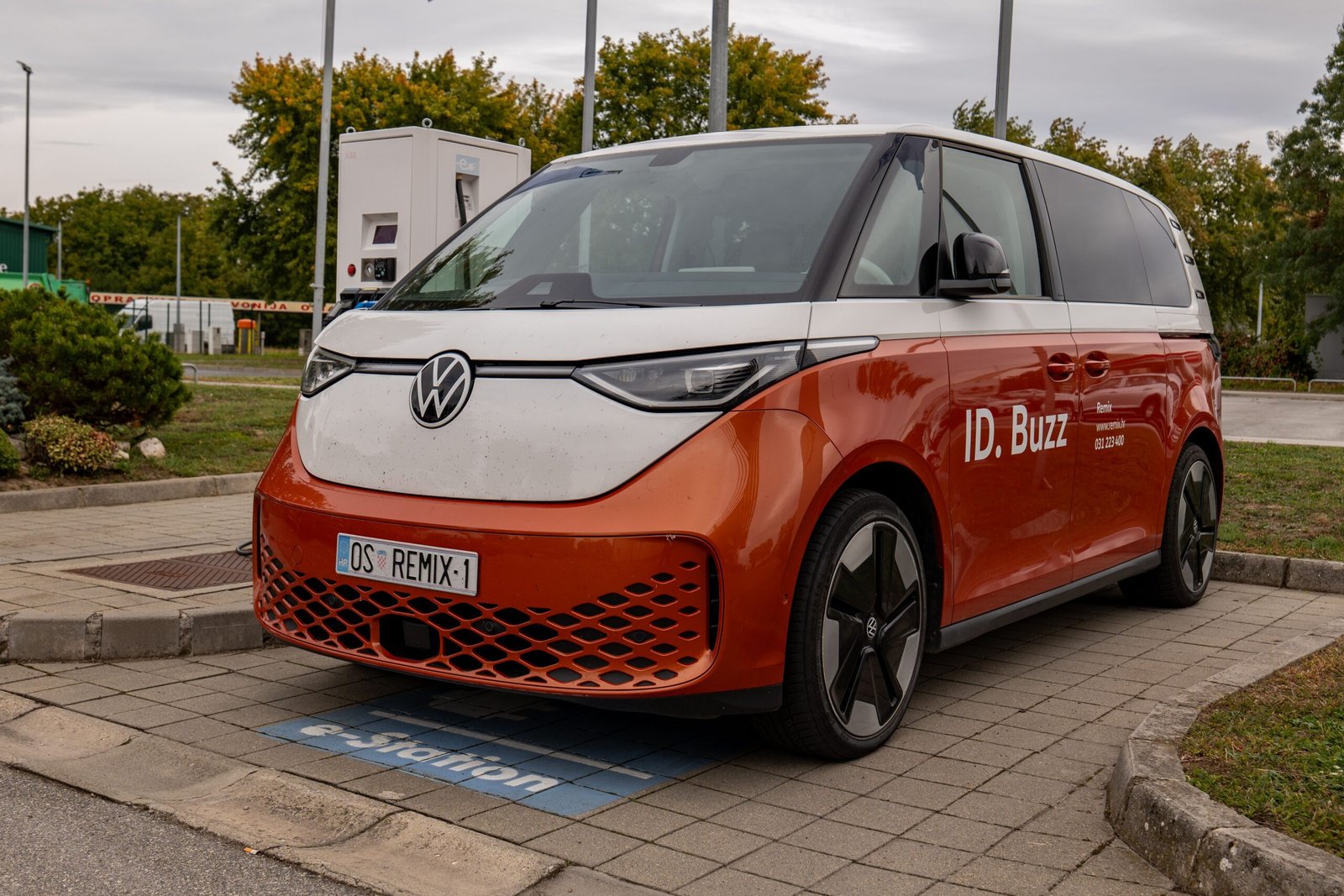
The Volkswagen ID. Buzz brings the spirit of the classic Volkswagen Microbus into the modern era with an all-electric powertrain, distinctive retro-inspired styling, and a spacious interior designed for families, road trips, and everyday transportation. Combining recognizable design elements with contemporary electric vehicle technology, the ID. Buzz offers an alternative to conventional SUVs and minivans for drivers who want practicality with personality.
Inspired by Volkswagen’s historic Type 2 Bus, the ID. Buzz preserves the original vehicle’s friendly appearance while introducing modern safety systems, digital displays, electric driving capability, and flexible passenger seating. Its short overhangs, upright profile, large windows, and two-tone paint options create a distinctive appearance that stands out among today’s electric vehicles.
For 2026, the Volkswagen ID. Buzz remains an appealing choice for buyers interested in an electric family vehicle with generous passenger space and useful cargo capacity. However, shoppers should consider range, charging availability, purchase price, and vehicle size before deciding whether it suits their lifestyle.
Whether we are comparing electric vans, researching the latest Volkswagen models, or considering an alternative to a traditional minivan, understanding the 2026 ID. Buzz’s features, performance, interior, and ownership costs helps us make a more informed decision.
2026 Volkswagen ID. Buzz Performance, Power, and Driving Experience
The Volkswagen ID. Buzz uses an all-electric drivetrain, replacing the gasoline engine and conventional transmission of the original Microbus with electric motors and a rechargeable battery. This configuration delivers smooth acceleration, quiet operation, and immediate torque, making the vehicle particularly suitable for urban driving and family transportation.
Power output depends on the model, battery configuration, and market. In European specifications, rear-wheel-drive versions can produce approximately 286 PS, while the dual-motor GTX version produces up to 340 PS. The GTX configuration adds all-wheel drive for improved traction and stronger acceleration. These figures should not be confused with North American specifications, which can differ by model year and trim.
The electric motor provides smooth power delivery without the gear changes associated with conventional gasoline vehicles. This makes the ID. Buzz comfortable in stop-and-go traffic, while its low-mounted battery helps lower the center of gravity.
The driving experience is also influenced by the vehicle’s size. Its upright design provides good outward visibility, but the relatively large body requires attention when parking or maneuvering through narrow streets. Drivers accustomed to smaller cars may need time to become comfortable with its dimensions.
For families, the combination of quiet operation, relaxed acceleration, and a spacious cabin makes the ID. Buzz an appealing alternative to traditional passenger vans.
Battery Range and Charging the Volkswagen ID. Buzz
Electric range is one of the most important considerations when choosing the ID. Buzz. Volkswagen offers different battery and body configurations across international markets, so the advertised range depends on the exact model.
For example, Volkswagen Commercial Vehicles lists a net battery capacity of approximately 79 kWh for certain versions and 86 kWh for selected long-wheelbase configurations. Depending on the version, official European WLTP range figures can reach approximately 293 miles or more. These figures are not directly comparable with EPA estimates used in the United States because the testing procedures differ.
Real-world driving range can be lower than the official rating. Cold weather, highway speeds, passenger loads, climate-control use, road gradients, and driving style all affect energy consumption.
Charging options generally include home charging and public charging stations.
Home charging: A compatible wallbox can provide convenient overnight charging, making daily use easier for drivers with access to private parking.
Public AC charging: Destination chargers can replenish the battery while the vehicle is parked at workplaces, shopping centers, or hotels.
DC fast charging: Compatible rapid chargers can restore a substantial portion of the battery during longer journeys. Actual charging speed depends on the vehicle, charger output, battery temperature, and current state of charge.
Before purchasing an ID. Buzz, we should evaluate the availability of chargers along our regular routes. Drivers who can charge at home generally have a simpler ownership experience than those who depend entirely on public charging.
Interior Space, Seating, and Cargo Capacity
The ID. Buzz is designed around a spacious, open cabin rather than the low seating position of a traditional sedan. Its tall roof and upright sides provide generous headroom and contribute to an airy interior.
Depending on the market, wheelbase, and seating configuration, the vehicle is available with five, six, or seven seats. The longer-wheelbase versions offer additional flexibility for families who need more passenger capacity.
The cabin emphasizes practical storage and modern technology. Features available on selected configurations include a digital instrument display, a central infotainment touchscreen, smartphone connectivity, multiple climate-control zones, and convenient storage compartments.
The upright windshield and large windows help create an open feeling for both the driver and passengers. Sliding side doors also make it easier to enter and exit in crowded parking spaces where conventional doors may be difficult to open fully.
Cargo capacity depends on how the seats are arranged. With the rear seats folded or removed where the configuration permits, the ID. Buzz can accommodate luggage, camping equipment, sports gear, and other bulky items.
The longer version is particularly attractive for people who regularly travel with several passengers and their belongings. However, shoppers should test the third-row seating and inspect the cargo area in person, because a vehicle’s maximum cargo figure does not necessarily represent the space available when all seats are occupied.
Volkswagen ID. Buzz Price, Trims, and Available Features
The price of the Volkswagen ID. Buzz varies significantly by country. Taxes, import duties, incentives, equipment, and local distribution arrangements can all influence the final cost.
In the United States, Volkswagen’s published ID. Buzz information for the 2025 model year listed the Pro S at a starting MSRP of $59,995 before destination charges, with higher prices for additional equipment and all-wheel-drive versions. That historical figure should not be treated as a confirmed 2026 U.S. price. Buyers should check the current model-year availability and official configurator before making a purchase decision.
Across markets, buyers may encounter different versions, including passenger-oriented trims, sportier GTX models, and commercial ID. Buzz Cargo variants.
| Configuration | Main advantage |
|---|---|
| Passenger ID. Buzz | Family transportation and flexible seating |
| Long-wheelbase version | Additional interior and cargo flexibility |
| GTX version | Higher performance and dual-motor all-wheel drive in applicable markets |
| ID. Buzz Cargo | Electric commercial transportation and load-carrying practicality |
Available equipment varies, but selected versions offer premium audio systems, panoramic roof options, power-operated doors, advanced parking assistance, and upgraded seating.
When comparing prices, we should consider the complete ownership cost rather than the advertised starting price alone. Insurance, charging equipment, electricity rates, tires, servicing, financing, and depreciation can all influence the long-term expense.
Safety, Reliability, and Everyday Ownership
The Volkswagen ID. Buzz incorporates modern driver-assistance and safety technologies, with availability depending on the market and trim. Depending on configuration, these may include automatic emergency braking, adaptive cruise control, lane assistance, parking sensors, and camera-based parking systems.
These features can make a large vehicle easier to manage, particularly in traffic and confined parking areas. Nevertheless, driver-assistance systems support rather than replace attentive driving.
As with any electric vehicle, battery health, charging performance, software updates, and service support are important ownership considerations. Prospective buyers should review the applicable battery warranty, general vehicle warranty, roadside assistance coverage, and local dealer support.
The ID. Buzz’s electric powertrain eliminates routine engine-oil changes and many maintenance tasks associated with combustion engines. However, owners still need to maintain tires, brakes, suspension components, cabin filters, and other systems.
Reliability over the long term depends on the individual vehicle, maintenance history, software, and operating conditions. Because the modern ID. Buzz is a relatively recent model, long-term ownership evidence is more limited than it is for some established gasoline-powered vans.
For buyers considering a used ID. Buzz, checking the service history, remaining battery warranty, charging equipment, software status, and accident history is especially important.
Is the Volkswagen ID. Buzz Worth Buying in 2026?
The Volkswagen ID. Buzz is a distinctive electric vehicle that combines retro-inspired styling with modern technology and practical passenger space. It is especially appealing to families, electric-vehicle enthusiasts, and drivers who want something different from a conventional SUV.
Its strongest advantages include its recognizable design, spacious interior, smooth electric performance, flexible seating options, and potential convenience when home charging is available. The commercial Cargo version also offers an alternative for businesses looking to electrify suitable delivery and transportation operations.
However, the ID. Buzz is not the right vehicle for every driver. Its purchase price may be higher than that of conventional family vehicles, its real-world range can vary considerably, and its tall body is less aerodynamic than some electric SUVs. Drivers who frequently undertake long journeys in areas with limited charging infrastructure should plan their routes carefully.
Before buying, we should compare the ID. Buzz with electric SUVs, other electric vans, and conventional minivans based on seating, luggage space, range, charging access, and total cost of ownership.
Final verdict
The Volkswagen ID. Buzz offers a compelling combination of iconic styling, modern electric technology, and family-friendly versatility. For buyers who value space, distinctive design, and electric driving, it deserves serious consideration in 2026. The best choice depends on the available model in our market, the range we realistically need, and whether the vehicle’s price and charging requirements fit our lifestyle.


 Lifestyle3 months ago
Daily Living Tools That Make Life Easier for Seniors
- Celebrity3 months ago
Edith Sarfati: A Closer Look at Her Life, Career, Family, and Lasting Legacy
- Business3 months ago
TravelTweaks Offers 2026 | Complete Guide to Travel Deals, Discounts & Smart Travel Planning
- Blog3 months ago
RTI Scheduler: The Complete Guide to Flexible Student Scheduling in Modern Schools
- Business3 months ago
Latest News MyGreenBucksNet (2026): Complete Guide to Platform Updates, Features, Earnings, and User Experience
- Tech3 months ago
How to Use 1.5f8-p1uzt in 2026: A Complete Guide to Understanding and Working with This Identifier
- Tech3 months ago
www. #TurboGeek.org Guide 2026 | Technology News, Gaming, Software & Tech Resources
- Business3 months ago
TTweakFlight Discount Codes by TravelTweaks (2026): The Complete Guide to Saving More on Flights